 How-to
Is Dry Fire Practice Safe for New Shooters?
Last Updated: November 21, 2026
Quick Summary
Dry fire practice for new shooters is safe when you treat an unloaded gun with the same respect as a loaded one. Remove all live ammunition from the room, lock it in a separate container, point the muzzle at a safe backstop, and confirm your firearm's manual allows dry fire before you start.
- Check your owner's manual first, since some rimfire pistols and older designs can be damaged without a snap cap.
- Keep your finger off the trigger until you are on target.
- Start with the Wall Drill: press the trigger slowly until it breaks, reset, and repeat ten times.
- A first routine should take 10 to 15 minutes and repeat three times a week.
- Dry fire teaches trigger control and sight picture but cannot teach recoil management.
Table of Contents
- Dry Fire Safety Rules Every New Shooter Must Follow
- Dry Fire Drills for Beginners: Build Fundamentals First
- Your First Dry Fire Practice Routine
- Frequently Asked Questions
Dry Fire Safety Rules Every New Shooter Must Follow
Dry fire practice for new shooters is safe when you treat an unloaded gun with the same respect as a loaded one. The mistake almost every beginner makes is assuming an empty chamber removes all risk. It does not. Safety comes from your habits, not your ammo count.
Here is a set of rules every new shooter should follow before dry firing a single rep.
The non-negotiables:
- Remove all live ammunition from the room, not just the gun
- Lock ammo in a separate container across the room
- Point the muzzle at a safe backstop that would stop a bullet
- Keep your finger off the trigger until you are on target (Don't Rely on Your Gun's Safety • NSSF)
- Never dry fire a gun you have not cleared and checked yourself
- Confirm your firearm's manual allows dry fire before you start
That second-to-last rule matters most. Some rimfire pistols and a few older designs can be damaged by dry firing without a snap cap. Check your owner's manual first.
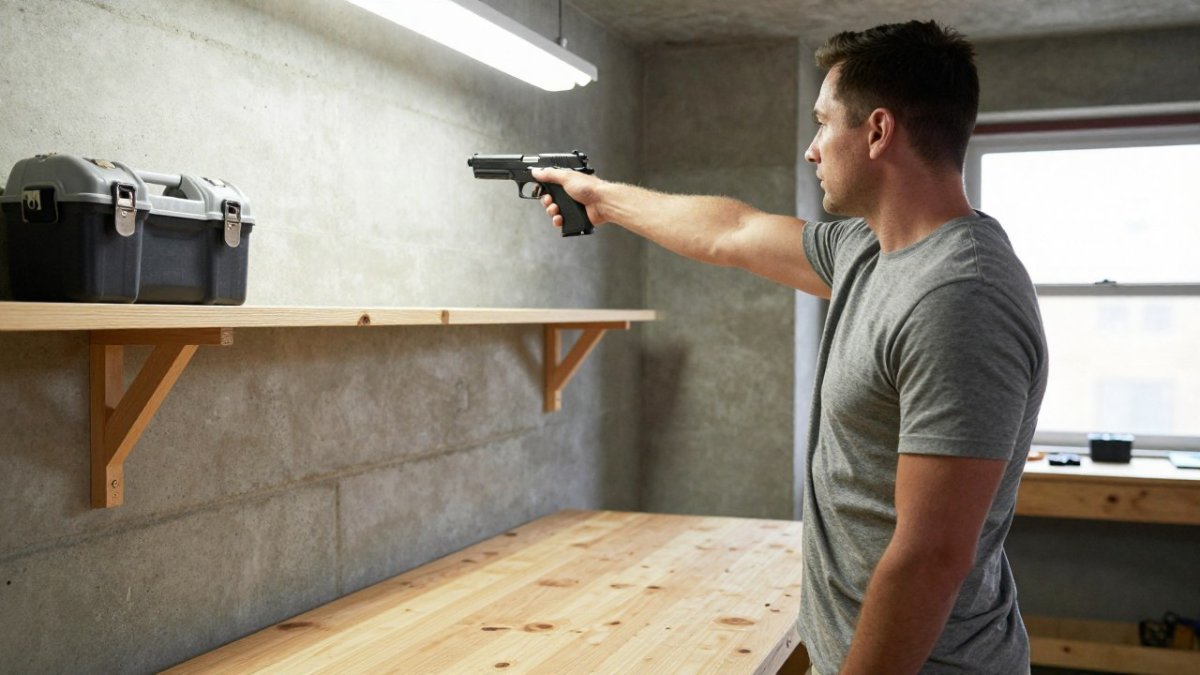
If you want a full walkthrough of setting up a safe home practice space, our guide to dry fire practice area setup covers the layout, backstop, and ammo storage in detail.
Dry Fire Drills for Beginners: Build Fundamentals First
The best beginner drills isolate one skill at a time. Grip, stance, sight alignment, and trigger control all matter, but you cannot fix them all at once. Start with the trigger press and work outward.
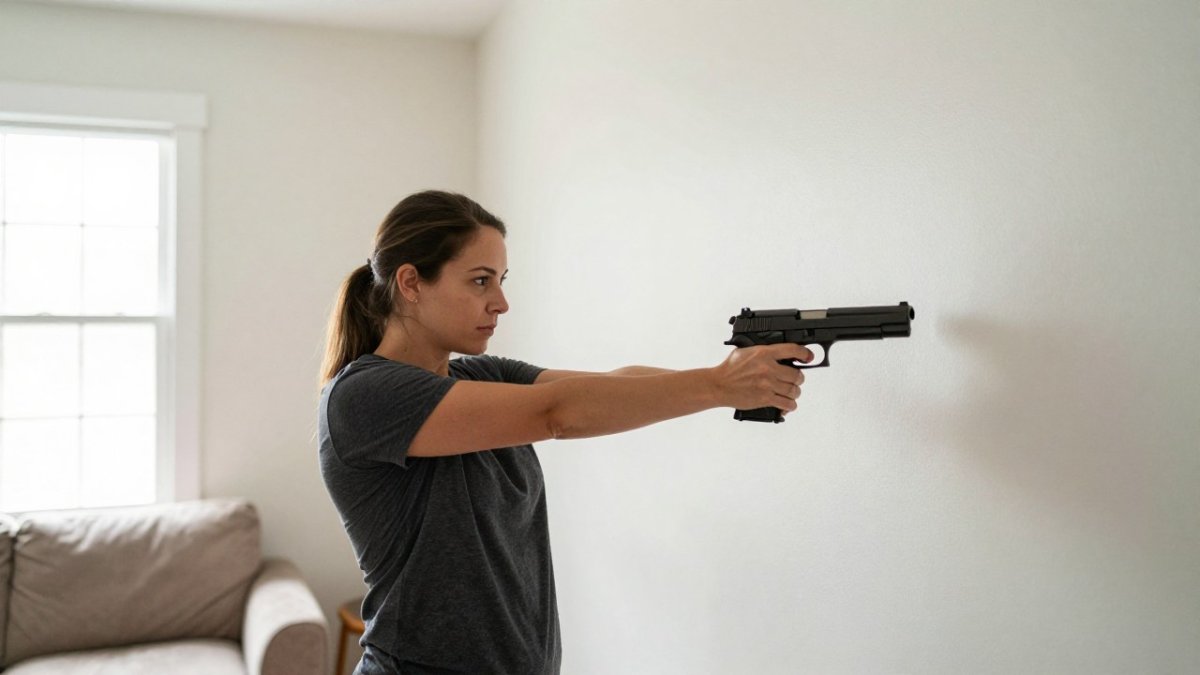
Drill 1: The Wall Drill. Aim at a blank wall. Press the trigger slowly until it breaks. Reset and repeat ten times. You are training your finger, not your eyes.
Drill 2: Sight Picture Hold. Present the gun, align the sights, and hold for five seconds. Watch for the front sight drifting.
Drill 3: Slow Draw. From a holster, draw to the target and pause. Speed comes later. Accuracy comes first.
Pick targets that suit these drills. Our breakdown of dry fire targets for handguns explains which paper and cardboard options work best for beginners.
Your First Dry Fire Practice Routine
A first routine should take 10 to 15 minutes and repeat three times a week. Short and consistent beats long and rare. Here is the session plan we recommend to new shooters.
| Segment | Time | Focus |
|---|---|---|
| Safety check | 2 min | Clear gun, separate ammo |
| Wall drill | 4 min | Trigger press and reset |
| Sight hold | 3 min | Sight alignment |
| Slow draw | 4 min | Presentation from holster |
| Log the session | 2 min | Note flinch or drift |
Time
Track one thing per session. If your front sight dips, that is your flinch telling on you. Dry fire is a diagnostic tool, and the log is where it pays off.
Our guide to building a handgun dry fire routine gives you a longer progression once these basics feel automatic.
Dry fire teaches trigger control and sight picture. It cannot teach recoil management. For that, you need live rounds and a coach. When you are ready for hands-on instruction, you can explore professional firearms and risk-mitigation training on the Tactical Trash Pandas website.
Dry fire practice rewards patience more than volume. If you want your at-home reps reinforced by an instructor who can correct your grip and draw in person, we can help. Tactical Trash Pandas offers reality-based firearms training, CCW courses, and emergency medical instruction for every skill level. Get started with Tactical Trash Pandas and turn safe practice into real confidence.
Frequently Asked Questions
Is dry fire practice safe for beginners?
Yes, when you follow strict dry fire safety rules. Remove all live ammunition from the room, do a physical and visual safety check of the chamber, and point the firearm only at a safe backstop. Never practice while distracted or rushed. Treat every repetition as if the gun were loaded, and keep ammunition stored in a separate room so there is no chance of mixing live rounds into your session.
How often should a new shooter practice dry fire?
Start with 10 to 15 minutes, three to four times per week. Short, focused sessions beat long ones because fatigue causes sloppy trigger presses that build bad habits. A simple dry fire practice routine of 10 slow repetitions per drill, done consistently, will improve your trigger control and sight alignment faster than an occasional hour-long session.
Can dry firing damage a firearm?
Most modern centerfire handguns and rifles handle dry fire without damage, but check your owner's manual first. Rimfire firearms and some older designs can be damaged by repeated dry fire, so use snap caps or a laser cartridge in those cases. When in doubt, ask an instructor or the manufacturer before you start a dry fire training habit.