 How-to
How Long Is Private Handgun Training? Hours and Costs
Last Updated: November 18, 2026
Quick Summary
Private handgun training has no fixed national length, so it varies by instructor, your experience and your goals. A typical lesson for a beginner runs in stages, with a safety briefing, classroom fundamentals, supervised live fire and a closing review. Confirm session length and round count in writing before booking.
- Private lessons have no single national standard, so length depends on the instructor and your goals.
- A typical beginner lesson includes a 15 to 20 minute safety briefing and paperwork.
- Supervised live fire usually takes the middle 45 to 60 minutes of the session.
- Plan for more time than you expect, since first-time shooters need extra repetitions.
- Private lessons do not automatically satisfy state permit training requirements, so check official rules.
Table of Contents
- How Long a Private Handgun Lesson Usually Runs
- What Happens During a Private Lesson, Hour by Hour
- Firearms Training for Beginners: How Much Time to Plan
- Pistol Training Course Duration Compared to Private Lessons
- Defensive Handgun Training Requirements and Licensing Hours
- What Changes How Long You Need in Training
- Booking Your First Private Session with Tactical Trash Pandas
- Frequently Asked Questions
How Long a Private Handgun Lesson Usually Runs
Private handgun lessons in the United States vary in length. There is no single national standard for private instruction, so the length you get depends on the instructor, your experience and what you want to cover. Private handgun training is a flexible service, not a mandated course.
Ask any instructor to spell out the session length, the number of rounds included and what is covered before you book. We recommend confirming those details in writing so there are no surprises on the day.
What Happens During a Private Lesson, Hour by Hour
A private lesson is not a single block of range time. Most instructors structure it as a sequence, and knowing that sequence helps you judge whether a quoted session length is realistic. The timeline below describes how a private lesson for a student with little or no handgun experience is generally structured.
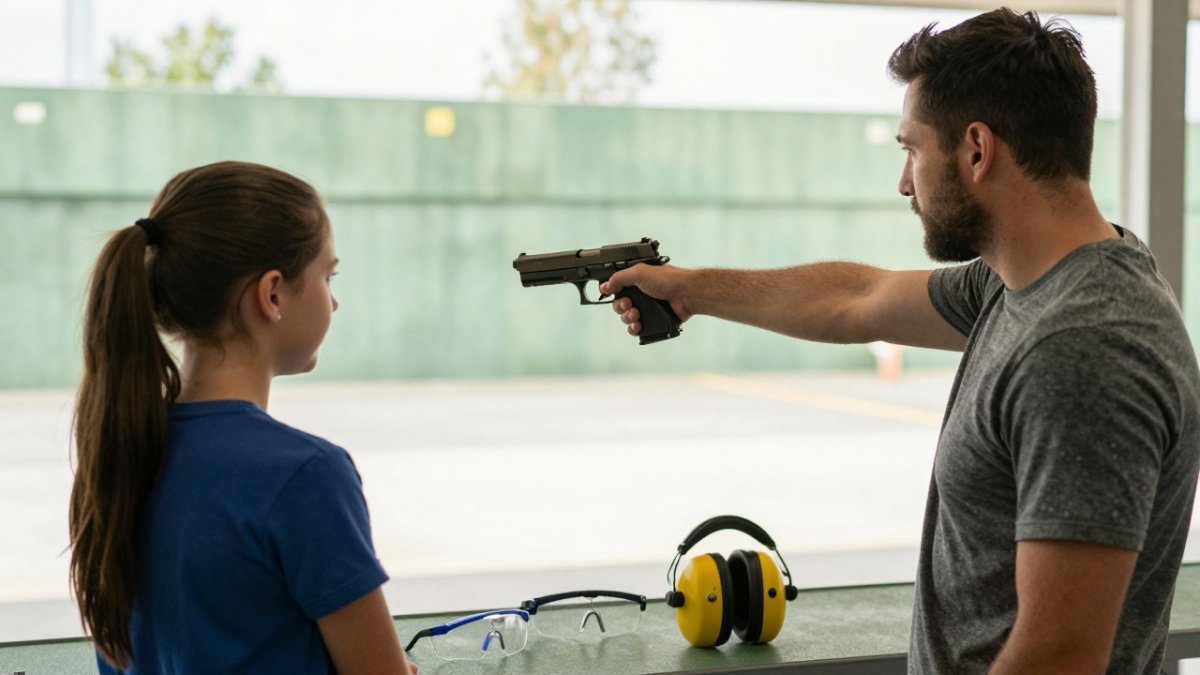
First 15 to 20 minutes: safety briefing and paperwork. The instructor reviews the four universal firearm safety rules, explains the range's commands and emergency procedures, and confirms you can legally possess and handle a firearm. This is also when you should disclose any physical limitations, such as hand strength or vision issues, that affect how you grip or aim.
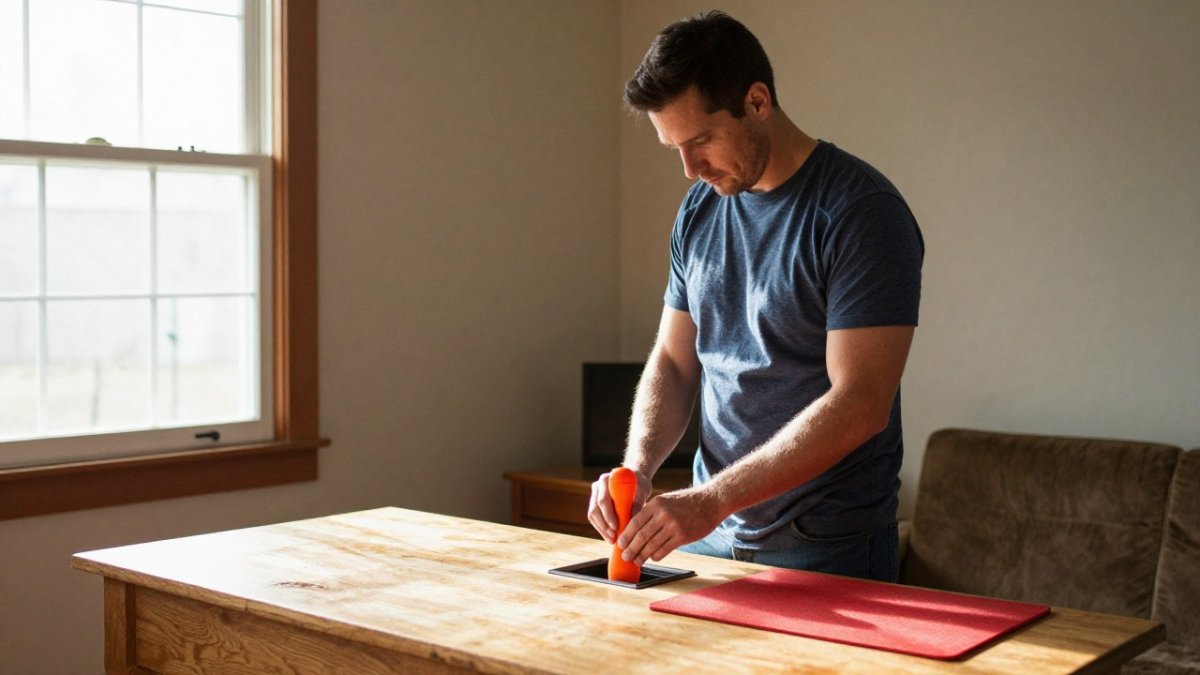
Next 20 to 30 minutes: classroom fundamentals. Before any live fire, the instructor covers the parts of the handgun, how to load and unload safely, and how to handle an unloaded pistol. You will likely dry fire and practice grip, stance, and sight alignment with an inert or unloaded firearm. This is where the instructor checks that you can keep the muzzle pointed in a safe direction and keep your finger off the trigger until ready to shoot.
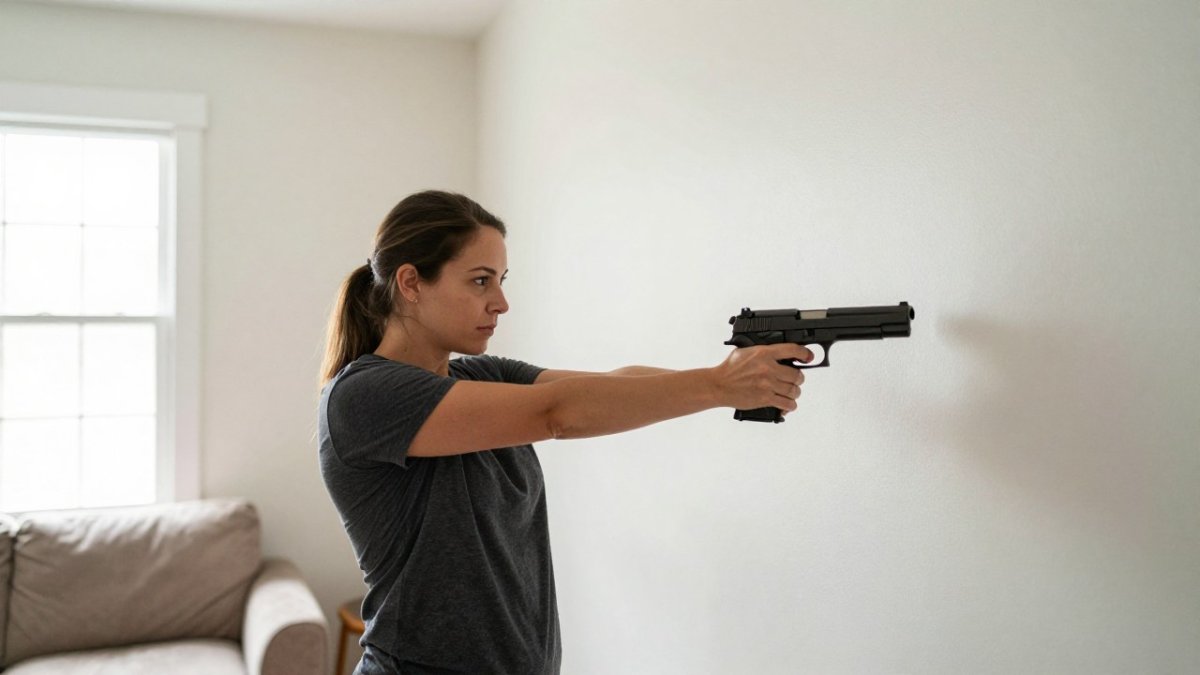
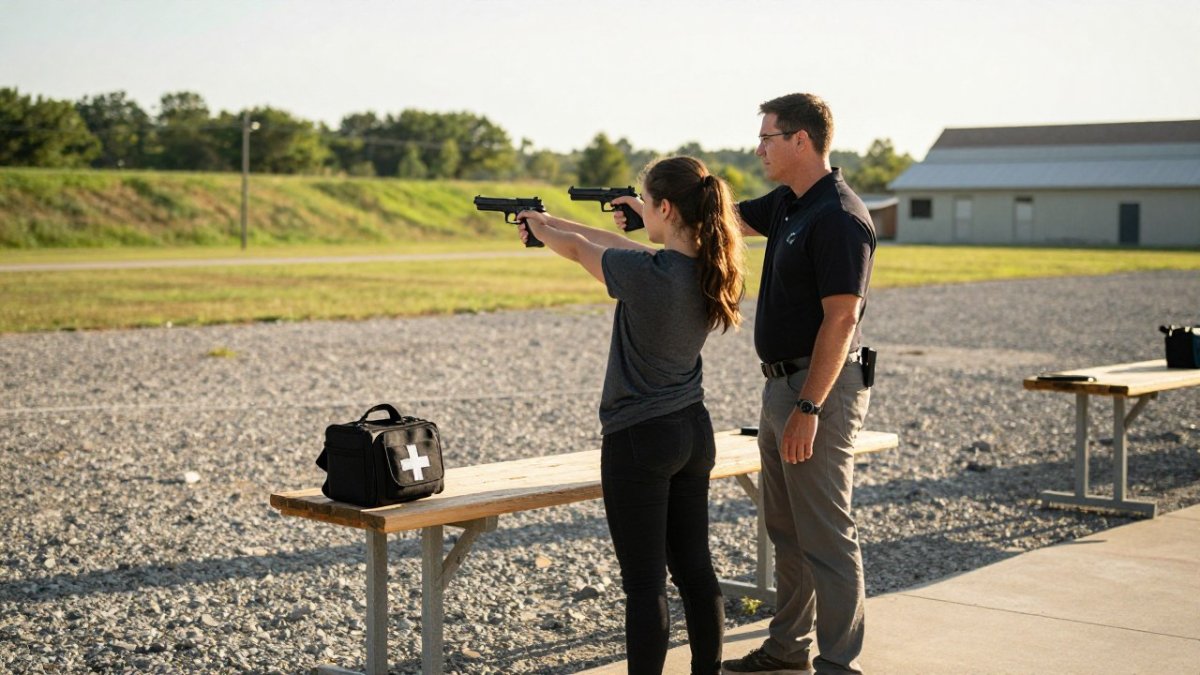
Middle 45 to 60 minutes: supervised live fire. The number of rounds fired depends on the instructor and your comfort level. Drills generally focus on safe loading, sight alignment, and trigger control. Instructors usually pause after small strings of fire to correct form and explain what went wrong. Slow, accurate repetitions build habits that hold up under pressure.
Final 15 to 20 minutes: review and practice plan. The instructor summarizes what improved, what still needs work, and what to practice before the next session. Many students find that dry fire practice, performed safely with an unloaded firearm, reinforces what they learned between sessions.
Ask for the timeline in writing so the session length and cost line up with what you actually receive.
The article breaks a typical private lesson into four stages, each with its own rough timing and focus.
| Stage | Approximate time | Main focus |
|---|---|---|
| Safety briefing and paperwork | First 15 to 20 minutes | Safety rules, range commands, legal eligibility |
| Classroom fundamentals | Next 20 to 30 minutes | Parts, loading and unloading, grip and stance |
| Supervised live fire | Middle 45 to 60 minutes | Safe loading, sight alignment, trigger control |
| Review and practice plan | Final 15 to 20 minutes | Progress summary and practice before next session |
Approximate minutes per stage of a typical private lesson
Firearms Training for Beginners: How Much Time to Plan
Beginners should plan for more time than they expect. A first session is often spent on fundamentals, and new shooters need extra repetitions before they feel comfortable with the basics. Planning a half-day or a full day gives you room to ask questions without feeling rushed.
Look for a provider that welcomes first-time shooters and explains each step without judgment. For a beginner-focused course in the area, see Beginner Handgun Safety & Shooting Manassas, Prince William County, and the DMV.
Pistol Training Course Duration Compared to Private Lessons
Private lessons and structured pistol courses serve different purposes. A private lesson is tailored to one student or a small group and can be scheduled around your needs. A structured course follows a fixed curriculum and length, often set by a state or a training program. Because a fixed curriculum can make training time and expenses easier to anticipate, comparing CCW training costs with the instruction and practice you need can help clarify which format fits.
Course durations vary widely, so compare the hours listed by each provider rather than assuming they match. A private lesson can be shorter or longer than a formal course depending on your goals.
Defensive Handgun Training Requirements and Licensing Hours
Licensing requirements are separate from private lessons. Some states set minimum training hours for permits, and those requirements are defined by the government, not by individual instructors. Because rules differ by jurisdiction and change over time, check the official source for current requirements before you assume a private lesson satisfies a permit.
Many people schedule private instruction in addition to any required course, to build skill beyond the minimum. Confirm the rules where you live.
What Changes How Long You Need in Training
There is no single number of hours that makes a person proficient. What changes is the starting point and the goal. The categories below are a planning guide, not a guarantee.
First-time student. Expect to need several sessions before safe handling and basic accuracy feel automatic, with dry fire practice in between. Rushing this stage creates habits that are hard to correct later.
Skills refresher. A student who has shot before but wants to rebuild fundamentals may need only one or two sessions. The instructor will usually spend the first part assessing what you already do well, then focus the remaining time on specific corrections.
Defensive-skills student. Training for defensive use involves drawing from a holster, shooting under time pressure, and making decisions under stress. That work is generally built over multiple sessions and often follows a prerequisite of solid basic handling.
Practice between sessions. Students who practice regularly often progress faster, which can shorten the total number of sessions needed. Students who do not practice should plan for more repetitions in class.
How to choose a lesson length and prepare. Before booking, ask the instructor three questions: what will be covered in the session, how many rounds are included, and what you should be able to do afterward. Bring eye and ear protection and a valid ID, and bring a handgun only if the provider asks you to. Set one or two specific goals, such as safe unloading or a consistent group at five yards, so the instructor can structure the time around them.
Private lessons versus certification or licensing requirements. Private coaching is optional and flexible. State-mandated training for a permit is a separate requirement with fixed hours set by law, and those hours vary by jurisdiction. A private lesson does not automatically satisfy a permit requirement, so confirm the rules where you live before you assume one substitutes for the other.
Follow-up after the lesson. A single lesson is not a substitute for continued practice. Ask the instructor for a written practice plan and schedule a follow-up session once you can perform the assigned drills safely on your own. Treat any duration estimate as a guide and adjust it to your own progress.
Booking Your First Private Session with Tactical Trash Pandas
Tactical Trash Pandas offers training for students at every level, from first-time shooters to seasoned pros. Our training focuses on practical, reality-based skills, safe handling and steady progress. Before you book, we recommend reviewing the Private Handgun Training Session Cost: What to Expect guide, which explains what affects pricing and what to ask when you call.
For current pricing and availability, contact Tactical Trash Pandas directly. Pricing depends on session length, the number of students and the date, so we do not publish a fixed rate here. Our team can explain what a session includes and help you choose a length that fits your goals. To learn more about one-on-one instruction, read How to Use One-on-One Handgun Training to Build Skill.
Frequently Asked Questions
How long does a typical private handgun training session last?
The length of a private handgun session depends on what you want to cover. A short session can introduce safe handling, grip, and sight alignment, while a longer one allows repetition and live-fire practice. Ask the provider how the session is structured before you book so you know how much time is set aside for classroom instruction versus range work.
Is a one-hour private lesson enough to learn handgun basics?
A single lesson is rarely enough to build lasting skill on its own. Most new shooters benefit from several sessions spread over weeks, with practice between lessons. Treat the first hour as a starting point and plan follow-up sessions to reinforce what you learned.
How many hours of training are recommended for new handgun owners?
There is no single recommended number of hours for every new handgun owner, because needs vary with experience and goals. Regular practice after the lessons matters as much as the initial hours. Your instructor can help you judge when you are ready to move on.
Does the length of private training depend on skill level?
Yes. A complete beginner usually needs more time to learn safe handling, the mechanics of the pistol, and basic marksmanship. An experienced shooter who wants to refine technique may need a session focused on specific skills. Your experience level and learning goals together determine how long a useful lesson will take.