 Listicle
How to Choose the Best Dry Fire Targets for Handguns
Quick Summary
The best dry fire targets for handgun practice are plain, high-contrast and sized so the sight picture matters more than the drawing. Look for a defined center mark, scoring zones you can read from your practice distance, and a surface that holds up to repeated presentations. Paper targets suit beginners, while reusable laminated targets suit frequent sessions.
- Choose a target with a defined center mark you can read from your practice distance.
- Avoid busy targets, since they make the aiming point hard to find.
- Paper targets are inexpensive and easy to replace for beginners.
- Laminated, wipe-clean targets suit shooters who practice daily.
- Mark where your sights settled after each trigger break to spot patterns.
Table of Contents
- What Makes a Dry Fire Target Worth Using
- Dry-Fire Practice Safety at Home
- Target Types for Handgun Dry-Fire Practice
- Pairing Your Targets With a Dry-Fire Training System and Drills
- Frequently Asked Questions
What Makes a Dry Fire Target Worth Using
Last Updated: November 5, 2026
Dry fire practice builds trigger control, sight alignment and presentation without a single round downrange, and the right dry fire targets make that work count. The target you use decides how much of that practice actually transfers. A good dry fire target gives you a clear aiming point, shows you where your shot went, and holds up to thousands of repetitions. A poor one teaches you to chase a smudge or ignore your own errors.
Most dry fire targets fail in one of three ways. They are too busy, so the aiming point gets lost. They are too small, so you cannot judge hits at realistic distances. Or they do not show the shot at all, which means you practice blind. Look for a target with a defined center mark, scoring zones you can read from your practice distance, and a surface that will not peel after a few hundred presentations.
Keep it simple. The best dry fire targets for handgun practice are plain, high-contrast and sized so the sight picture matters more than the drawing.
Dry-Fire Practice Safety at Home
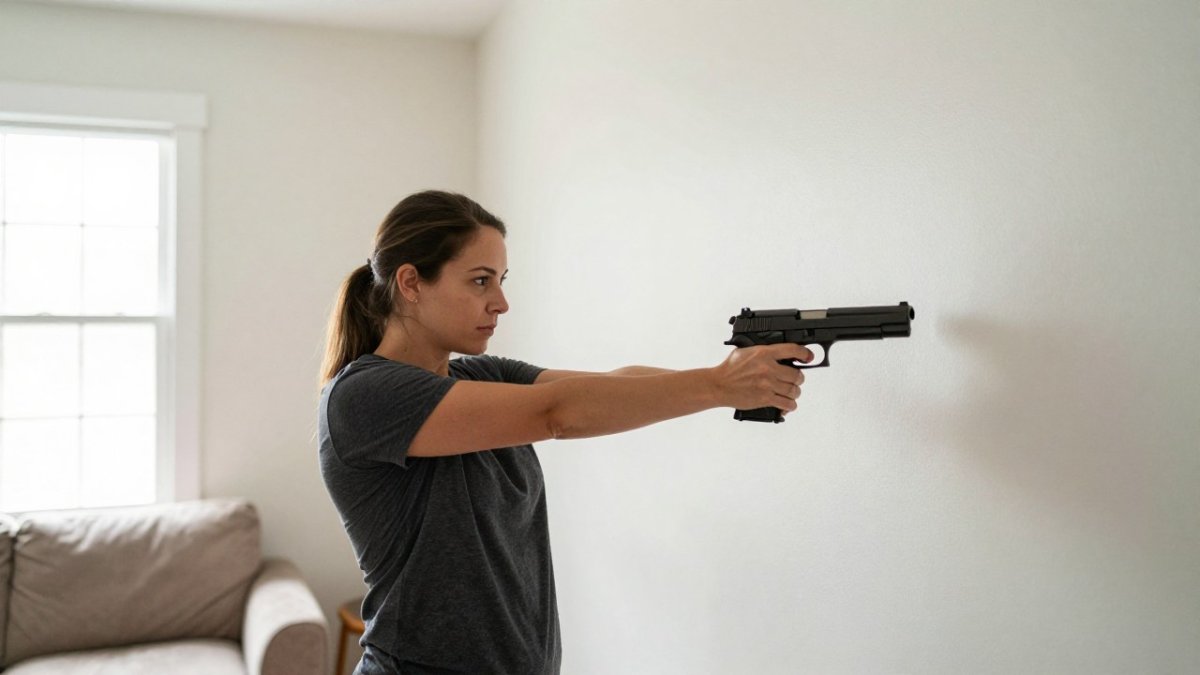
Dry-fire practice is safe only when you treat every session as if the gun is loaded. Begin by clearing the firearm and checking it twice, then remove all live ammunition from the room before you start. Many accidental discharges happen because a magazine or a loose round was left nearby. Establishing this rigorous physical discipline creates the necessary foundation for incorporating structured dry fire practice routines into your regular training schedule.
Pick a safe backstop. Aim the handgun at a wall or berm that can stop a bullet if your hand slips, and never point it at a door, window or another room. Place your target on a solid surface where the wall behind it is clear of people, pets and valuables.
Watch for the most common home mistakes: setting targets in front of hallways, practicing near a loaded storage case, or leaving the gun on a table during a break. Use a dedicated space and store the firearm and any ammunition separately before you finish.
Target Types for Handgun Dry-Fire Practice
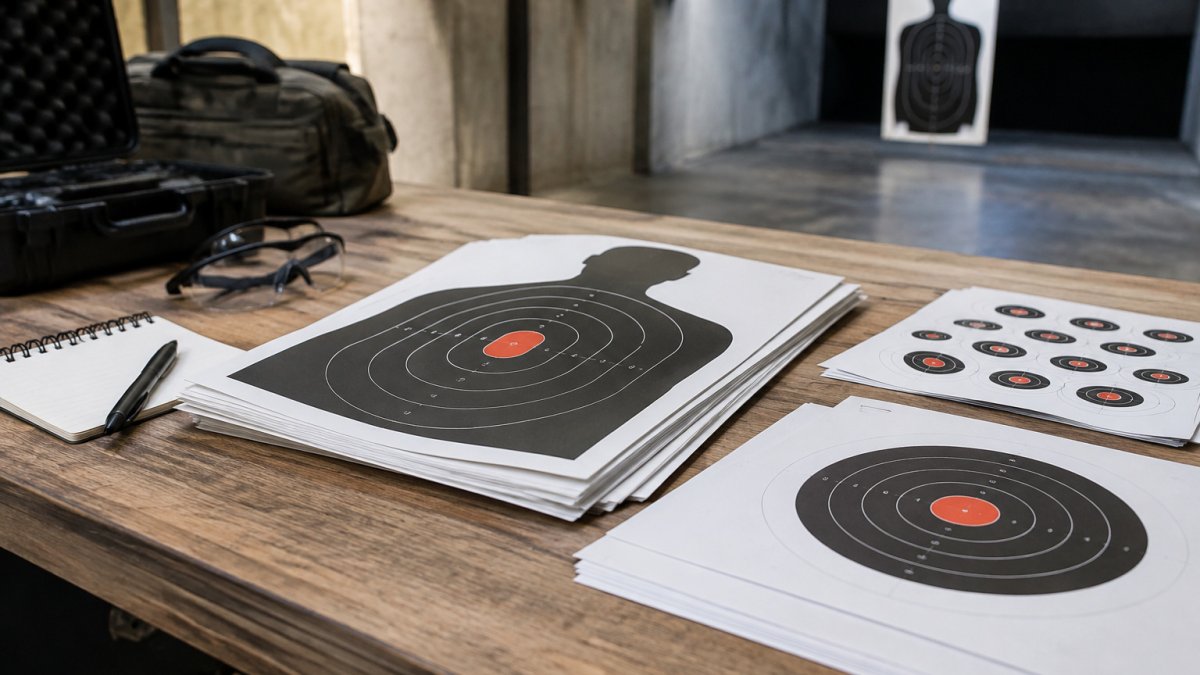
Paper and printed targets are the most common choice for beginners. They are inexpensive, easy to replace and give you a visible aiming point. Their drawback is that they wear out quickly if you pull the trigger hundreds of times against the same spot.
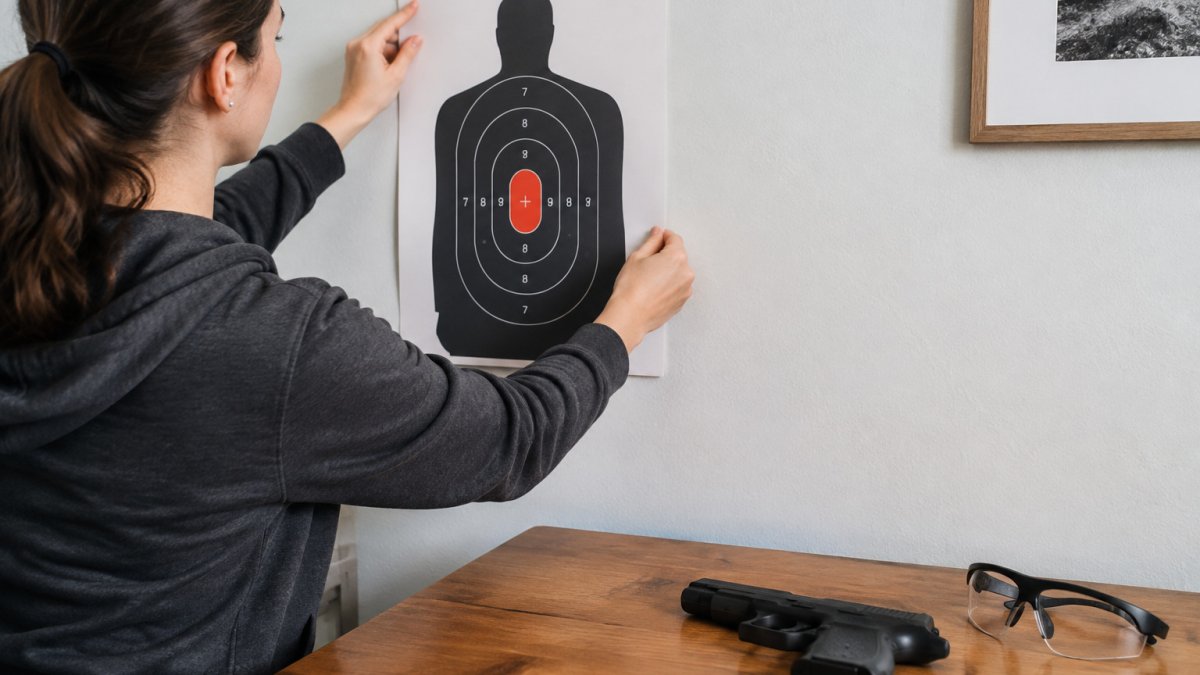
Reusable and laminated targets are better for frequent sessions. A wipe-clean surface lets you run the same target through many drills and mark it with dry-erase ink. Some shooters prefer a target with several smaller aiming areas, which allows practice on multiple points in one session.
Choose based on how you train. If your sessions are short and focused, a simple paper target is enough. If you practice daily, a durable surface will save you money and keep your sight picture consistent over time.
The article compares the main target types you can use for handgun dry-fire practice.
| Target type | Best for | Key difference |
|---|---|---|
| Paper and printed | Beginners | Inexpensive and easy to replace |
| Reusable and laminated | Frequent sessions | Wipe-clean surface, dry-erase marking |
| Multi-aiming-point | Varied practice in one session | Several smaller aiming areas |
Pairing Your Targets With a Dry-Fire Training System and Drills
A target works best as part of a routine. Set a consistent distance, pick one aiming point, and run a short sequence: draw, present, press the trigger, hold your sight picture, and reset. Record where your sights were at the moment the trigger broke.
Use the target to track progress rather than just to aim. Mark the spot your sights settled on after each repetition, and review those marks at the end of the week. Patterns reveal flinches and grip problems long before live fire does.
Build the drills gradually. Start with slow, deliberate repetitions, then add speed once your sight picture stays steady. For dry-fire practice focused on consistency, a regular schedule of short sessions outperforms occasional long ones.
Frequently Asked Questions
Can you use a regular paper target for dry-fire practice?
Yes, a standard paper target works for dry-fire practice, as long as you can see where the sights were aligned at the moment of the trigger break. Paper targets with a clear aiming point let you judge sight alignment and trigger control. Because a dry-fire session produces no impact, you cannot check results on paper, so mark the aim point with a visible dot or circle and review your sight picture after each repetition. Bullseye-style targets are common and inexpensive at most sporting goods stores in the United States.
How often should you practice dry firing a handgun?
Short, frequent sessions work better than occasional long ones. Many shooters practice for 10 to 15 minutes several times a week, focusing on one fundamental such as trigger press or sight alignment each session. Keep the routine consistent and track what you worked on. Always follow dry-fire practice safety steps: confirm the firearm is unloaded, remove ammunition from the room, and use a backstop that stops a round in case of an accident.
Do you need a laser or electronic target for dry-fire training?
A laser or electronic target is not required, but it can help with feedback. Laser-based systems show where the sight pointed when the trigger broke, which makes flinching and trigger jerk easier to spot. Paper targets and a simple aiming dot can still build sound fundamentals. Choose the setup that fits your budget and space, and prioritize consistent practice over expensive equipment. Pricing varies by product, so check current costs directly with the seller.