 Comparison
Private Handgun Training Safety Requirements Explained
Quick Summary
Private handgun training safety requirements vary by state, since there is no single national standard, and private instructors often add their own rules. Every lesson should cover the core firearm safety rules: keep the muzzle pointed in a safe direction, keep your finger off the trigger until ready to fire, and treat every handgun as loaded.
- Each state sets its own private handgun training safety rules, and instructors may add more.
- A private lesson should cover handling, storage and range procedures before any live fire.
- Training alone may not reduce unsafe firearm storage, so storage guidance should be included.
- Maryland lists 4 hours of training for new Handgun Qualification License applicants.
- Ask instructors for documentation of completed training and verify it meets your state's rules.
Table of Contents
- Firearm Safety Rules Every Private Handgun Lesson Should Cover
- What a Private Handgun Lesson Should Include for Safety
- Finding a Basic Firearms Safety Course and Training Certificate
- Frequently Asked Questions
Firearm Safety Rules Every Private Handgun Lesson Should Cover
Last Updated: November 7, 2026
Private handgun training safety requirements are not one national standard. Each state sets its own rules, and private instructors often add their own.
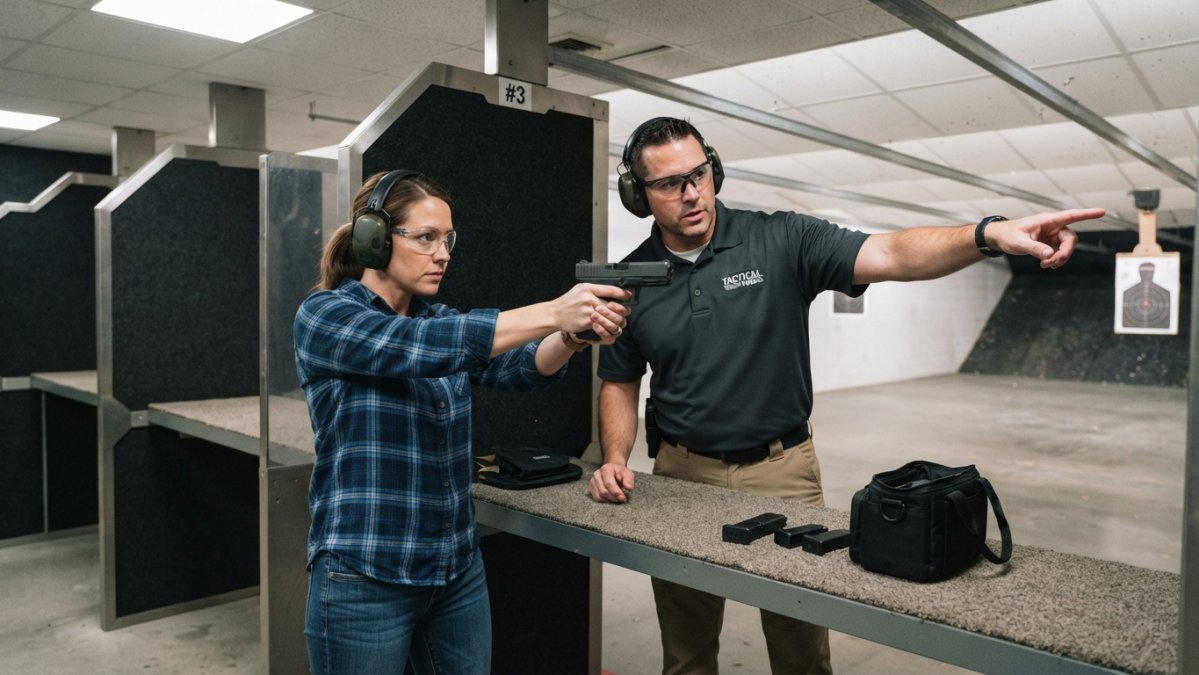
The core rules are simple. Keep the muzzle pointed in a safe direction at all times. Keep your finger off the trigger until you are ready to fire. Treat every handgun as if it is loaded. These rules, sometimes called the firearm safety rules, form the foundation of safe gun handling.
What a Private Handgun Lesson Should Include for Safety
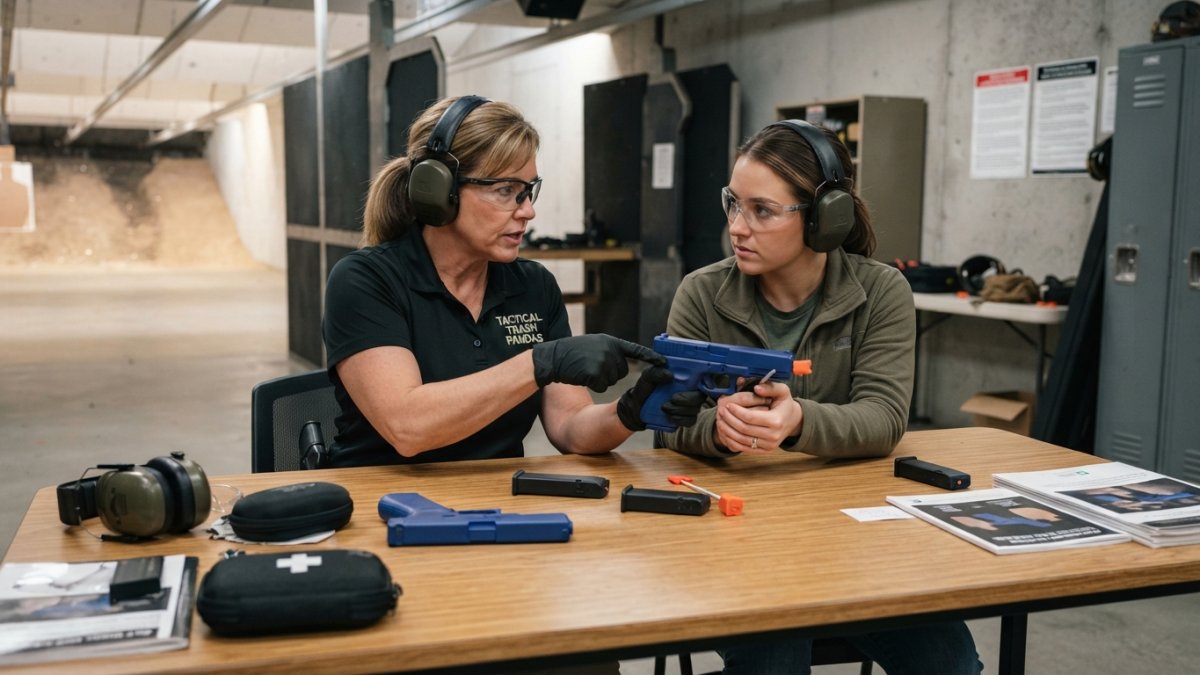
A private lesson should cover handling, storage and range procedures before any live fire. Research on firearm safety training requirements reports that 61 percent of U.S. firearm owners had some formal training in firearm safety and use.
Training alone may not change how people store firearms. 2019 study of firearms training and storage practices concluded that training, as currently provided, is unlikely to reduce unsafe storage, so lessons should include storage guidance as well.
The article lists the safety topics a private lesson should cover and the training figures it cites.
| Item | Value | Note |
|---|---|---|
| Lesson coverage | Handling, storage, range procedures | Before any live fire |
| U.S. owners with formal training | 61 percent | Per RAND research |
| Training alone reduces unsafe storage | Unlikely | 2019 study finding |
Finding a Basic Firearms Safety Course and Training Certificate
Start by checking your state's requirements for a basic firearms safety course and any training certificate. Maryland, for example, lists 4 hours of training for new Handgun Qualification License applicants, according to Maryland State Police firearms safety training requirements.
Ask any instructor for documentation of completed training, and verify it meets your state's rules. Beginners looking for a patient instructor can start with a local anchor: beginner handgun safety class, or compare formats with anchor: one-on-one pistol training before booking.
Practice safe handling between lessons with a anchor: dry fire routine guide, and learn how anchor: one-on-one handgun training builds skill safely. For tips on choosing an instructor, see anchor: patient gun instructors for beginners.
Ready to build safe, confident handling skills? Tactical Trash Pandas offers reality-based firearms safety training for every skill level, including CCW, First Aid, CPR, and Active Shooter response.
Frequently Asked Questions
What are the 5 basic gun safety rules?
The widely taught rules are: treat every firearm as if it is loaded, never point a gun at anything you are not willing to destroy, keep your finger off the trigger until ready to shoot, keep the firearm unloaded when not in use, and be sure of your target and what lies beyond it. These rules appear in most basic firearms safety courses and are a practical baseline for any private lesson. Ask your instructor to demonstrate and explain each one before any live fire begins.
Do you need to take a course to own a gun?
In most of the United States, no course is required to purchase a handgun, but requirements vary by state. Some states require a safety course or license for purchase, carry, or both. Check your state's requirements before buying, and review the statutes or your state police website for current rules. A private lesson can build skills, but it may not satisfy a legal requirement unless the provider meets the state's criteria.
How can you verify a handgun instructor's qualifications?
Ask for the instructor's certifications, the training organization that issued them, and how long they have taught. Confirm any state-recognized credential with the issuing body. Ask whether the lesson includes a written safety briefing, supervised live fire, and a completion document. A reputable instructor will answer these questions directly and will not object to verification.