 Comparison
Patient Gun Instructors for Beginners: What to Look For
Quick Summary
Patient gun instructors for beginners are teachers who break skills into small steps, explain the reason behind each correction, and let students repeat drills until they stick. For a nervous first-time student, this calm, unhurried approach matters more than a long list of credentials.
- Ask how the instructor handles a student who is slow to pick up grip or stance.
- Check that credentials come from recognized programs such as the NRA Firearm Training program.
- Confirm whether ammunition, targets, and range fees are included in the course fee.
- Expect the first hour to cover the four safety rules and how the handgun functions.
- Treat rushing through safety rules or pressure to buy equipment as red flags.
Table of Contents
Why Patience Matters More Than Experience in a Beginner Firearms Class
Patient gun instructors for beginners are often the difference between a student who builds real skill and one who quits after the first range session. For a nervous first-time student, a calm, unhurried teacher matters more than a long list of credentials. Patience lets you ask the "dumb" question without embarrassment and repeat a drill until it sticks.
Research on firearm safety counseling points to the same gap. A PubMed Central study on talking about firearm injury prevention notes that clinicians and firearm owners alike often lack the training to have these conversations well (Talking about firearm injury prevention with patients). Training that respects how people actually learn closes that gap.
Most beginners overestimate how much they need to know before a first class. If you are still deciding whether to train first, read why training before buying a first handgun can help. What they actually need is a safe environment, repetition, and an instructor who corrects without belittling. Experience on the range is useful for an instructor, but teaching ability is a separate skill. When you are choosing a class, ask how the instructor handles a student who is slow to pick up grip or stance. That answer tells you more than a résumé.
What to Expect at a Handgun Class, Start to Finish
A typical beginner class moves in stages. It starts with classroom instruction on firearm safety rules, then basic handling and loading under supervision, and finally supervised live fire at the range. Beginner courses commonly combine classroom and range time, according to SIG Sauer Academy beginner course descriptions.
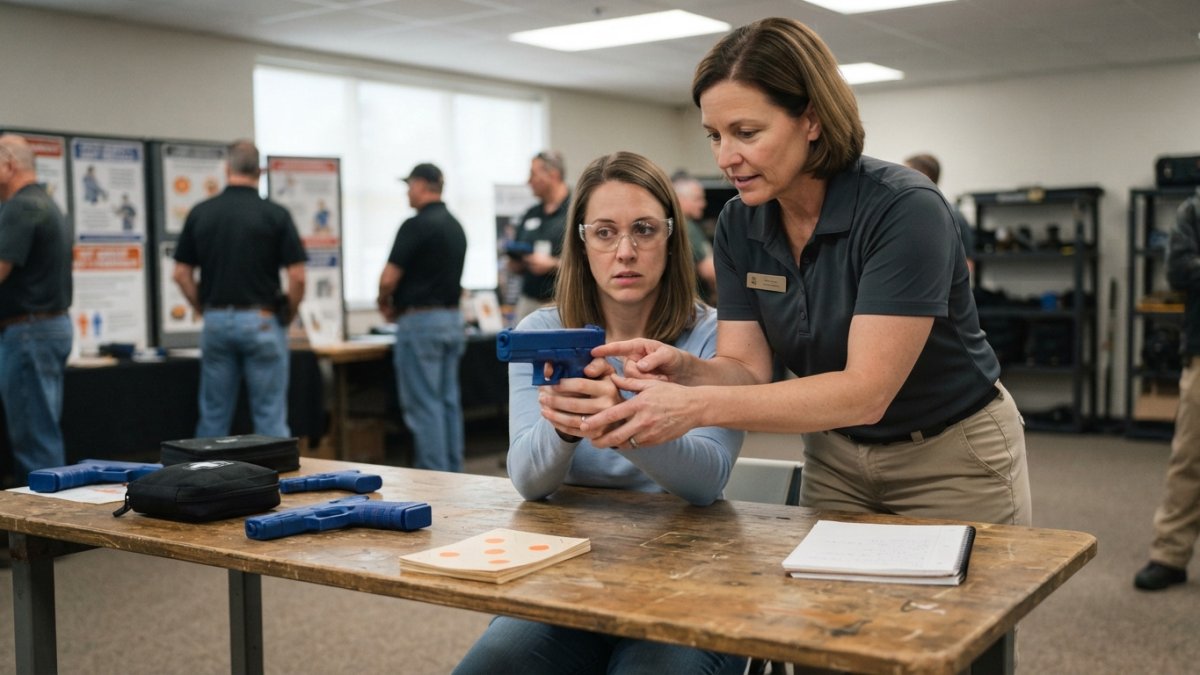
Expect the first hour to be mostly talk. For a full walkthrough of what a concealed carry class looks like for beginners, see our guide to the class from start to finish. You will cover the four safety rules, how the handgun functions, and how to tell whether it is loaded. The range portion follows, where you practice grip, stance, sight alignment, and trigger control. Good instructors break these into small steps and let you practice each one before moving on.
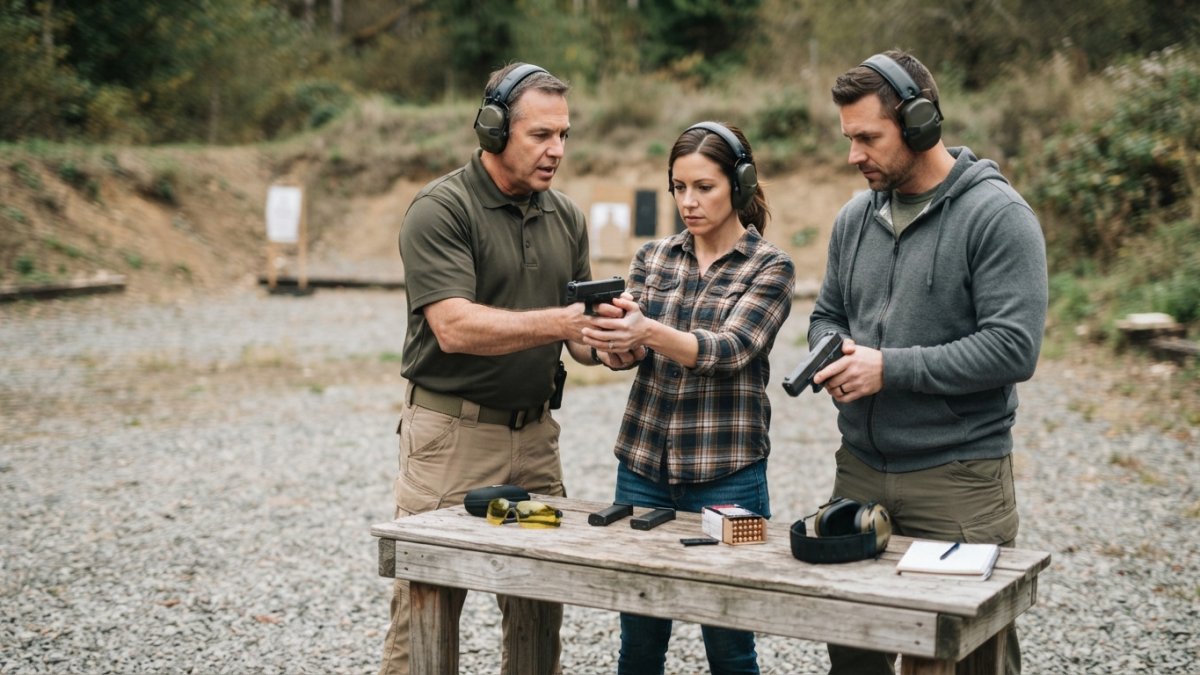
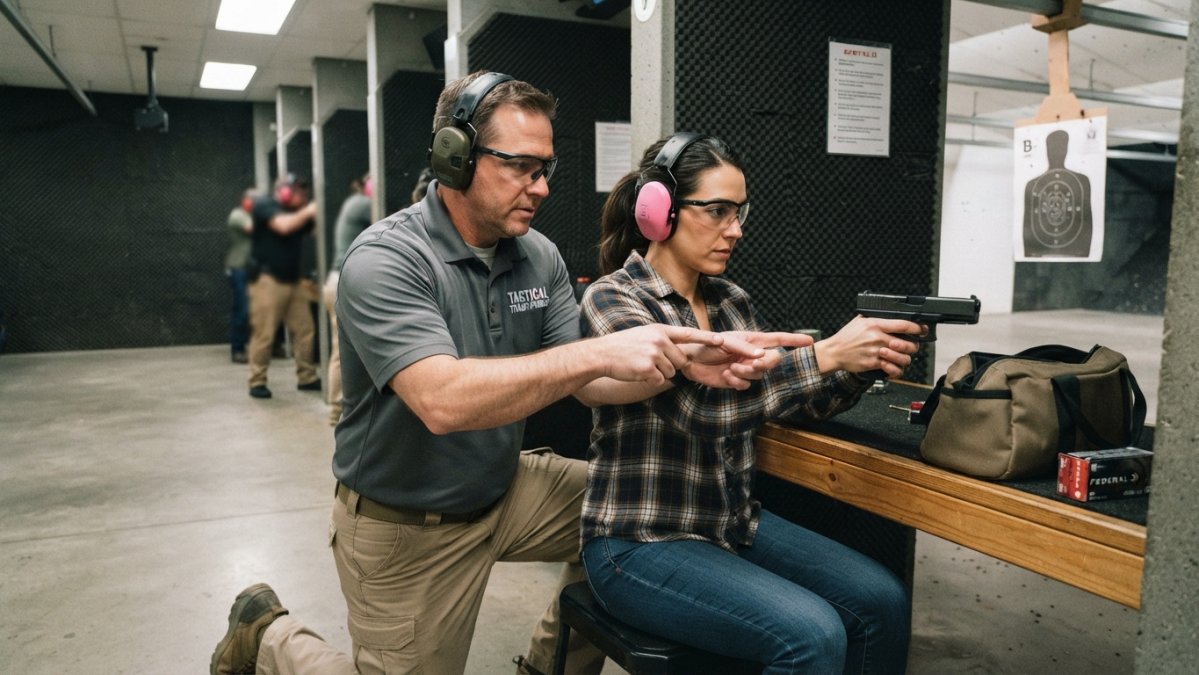
Live fire is the part most students remember. The instructor should be within arm's reach, watching your muscle position and your trigger press. Expect corrections, and expect to repeat drills more than you thought you would.
How to Vet a Patient Firearms Instructor: Credentials, Teaching Style, and Red Flags
Start with credentials, but read them carefully. Certifications from recognized programs such as the NRA Firearm Training program show that an instructor completed a standardized curriculum (NRA Firearm Training pistol courses). Credentials alone do not guarantee patience, so pair them with questions about how the instructor teaches. You can review the NRA and USCCA certified instructors and their experience before you book.
Teaching style is the real test. Ask how they handle a student who freezes, and how they correct a bad grip without making the student feel foolish. A patient instructor breaks skills into small pieces, explains the reason behind each correction, and checks understanding before moving on.
Watch for red flags. An instructor who rushes you through safety rules, mocks questions, or pressures you to buy equipment during the class is a poor fit for a beginner. So is one who cannot explain how they teach nervous or first-time students. Establishing a solid foundation in firearm safety is a critical prerequisite for anyone planning to enroll in beginner self defense classes.
Questions to Ask a Firearms Instructor Before You Book
Ask these before you pay:
- How many students are in each range group, and can I get one-on-one instruction?
- How do you handle a student who is nervous or has never handled a gun?
- What does the course fee include, such as ammunition, targets, and range fees?
- Can I see your instructor credentials and any relevant training history?
- What is the class format: classroom hours, range hours, and total duration?
Clear, direct answers are a good sign. Vague answers or reluctance to share credentials are not.
Beginner Handgun Class Duration, Format, and Cost: What You Are Paying For
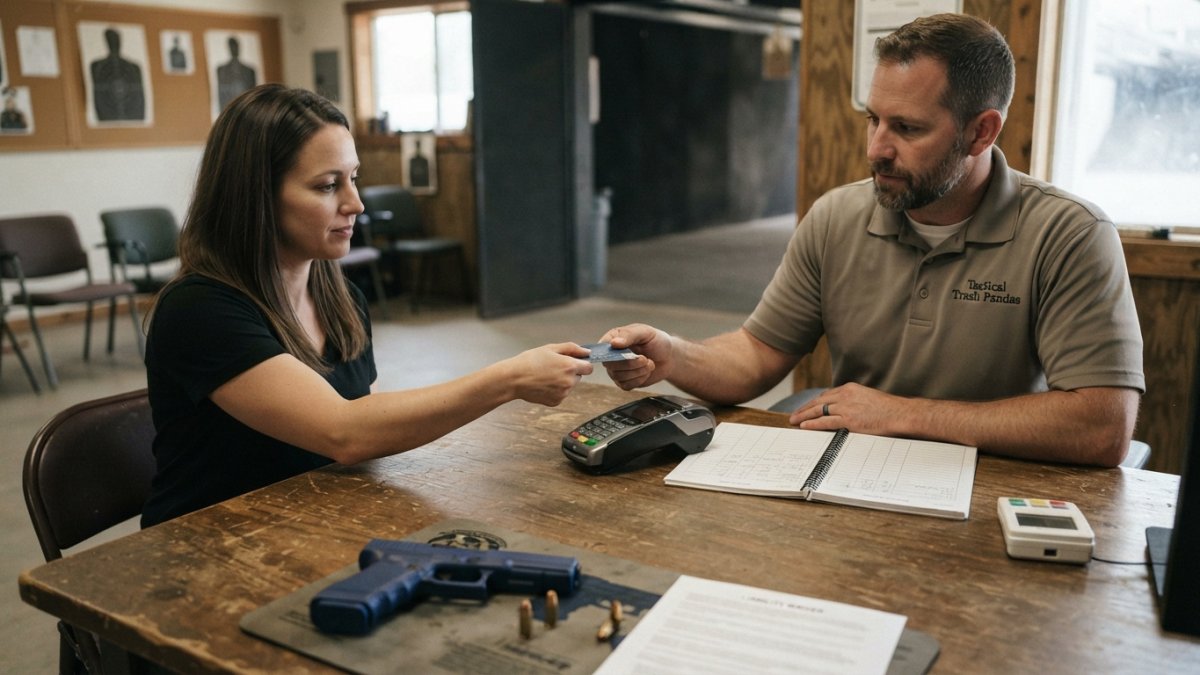
Beginner class length and format vary by provider, so check the course outline before you book. Pricing depends on class size, dates, and whether ammunition and range fees are covered, so confirm current prices on Tactical Trash Pandas's website or request a quote before committing.
Ask what the course fee covers. A fair price should make clear whether ammunition, targets, and range fees are included, and whether you get individual instruction or share an instructor with a large group.
Booking Your First Firearms Safety Course for Beginners
Once you have shortlisted instructors, book a class that matches your comfort level and goals. You can start with our first firearms safety course for beginners and pick a session that fits your schedule. Choose a smaller group if you want more individual attention, and tell the instructor up front that this is your first time handling a firearm. Bring the required identification and any paperwork the provider specifies, and arrive early to settle in.
If you are still weighing whether to take a class before buying a handgun, our guidance on whether to train first can help you decide. Tactical Trash Pandas provides reality-based firearms safety training for all skill levels. Visit the website to see class options and schedule your first course.
Frequently Asked Questions
How do I find a patient firearms instructor for beginners?
Start by asking instructors directly how they teach complete beginners and whether they allow slower pacing. Look for instructors who explain safe handling before live fire, who welcome questions without judgment, and who keep group sizes small enough for individual attention. Ask for references from past students who had no prior experience, and check that the instructor holds current, verifiable credentials. Tactical Trash Pandas can answer these questions directly, and you can ask any provider the same list before you commit.
How long does a beginner handgun training class usually take?
Beginner handgun classes commonly run from a few hours for an introductory session to a full day for a course that includes classroom instruction and supervised range practice. Some providers split a longer curriculum across several sessions. Course length depends on the content, the number of students, and whether live fire is included. Confirm the total time, break schedule, and any range-only sessions when you book so you can plan around work and family commitments. Exact durations vary by provider, so check each course description.
What questions should I ask before booking a firearms training class?
Ask how many students share each instructor, whether beginners can bring their own questions to one-on-one time, and what equipment is provided versus required. Confirm what the course fee includes, such as ammunition, range fees, targets, and certificates, and whether there are additional charges. Ask what happens if you feel uncomfortable or need to slow down during drills. Pricing depends on the course, dates, and delivery format, so request current pricing from Tactical Trash Pandas on its website or by quote.
Do beginners need prior experience to take a handgun class?
No. Beginner courses are designed for people who have never handled a handgun. They start with safe handling, grip, stance, sight alignment, and trigger control before any live fire. Instructors should explain each step and confirm you understand it before moving on. If you are nervous, tell the instructor at the start so they can adjust pacing and explain each step in more detail.