 Ultimate guide
Beginner Firearm Classes in Manassas VA: What to Expect
Last Updated: October 31, 2026
Quick Summary
Beginner firearm classes in Manassas, VA give new owners structured, supervised instruction before they handle a gun on their own. Classes open with firearm safety rules, move to a classroom session, and then continue with supervised range practice of stance, grip, and sight alignment.
- Most beginner classes open with firearm safety rules because every later skill depends on them.
- Expect a full day or more, with check-in, classroom instruction, and then supervised range time.
- Introductory pistol training covers loading, unloading, grip, stance, sight alignment, and trigger control.
- Rent a firearm first if you are brand new, or buy one beforehand if you already plan to carry daily.
- Keep your original course certificate, since the court may request a copy with your concealed carry application.
Table of Contents
- Why Beginner Firearm Classes in Manassas Matter for New Owners
- Firearm Safety Class for Beginners: The Rules You Will Learn First
- What to Expect at a Firearm Class, From Check-In to Range Time
- Introductory Pistol Training: Handling, Operation, and Mechanics
- Concealed Carry Permit Requirements for Virginia Residents
- How to Choose a Firearms Instructor You Can Trust
- Equipment and Clothing: What to Bring and What to Skip
- Managing First-Time Shooter Anxiety and Post-Class Practice
- Booking Your First Beginner Class With Tactical Trash Pandas
- Frequently Asked Questions
Why Beginner Firearm Classes in Manassas Matter for New Owners
Beginner firearm classes in Manassas, VA give new owners structured, supervised instruction before they handle a gun on their own. This guide from Tactical Trash Pandas explains what those classes cover, how the process works, and how to choose a program that fits your goals.
A firearm is a tool that demands respect and skill. Training is how new owners learn to handle it safely, operate it correctly, and store it responsibly. Research from the University of Maryland criminologists' study on firearm safety training indicates that safety training could meaningfully reduce gun violence in high-risk communities, which is one reason instructors treat foundational education as the first priority.
Beginner-focused courses are offered by several providers in the Northern Virginia area, and Tactical Trash Pandas offers training for all skill levels, from first-time shooters to experienced students.
Firearm Safety Class for Beginners: The Rules You Will Learn First
Most beginner classes open with firearm safety because every later skill depends on it. Students learn to keep the muzzle pointed in a safe direction, keep their finger off the trigger until they are ready to fire, and treat every firearm as loaded until they confirm otherwise.
Watch out: the most common first-class mistake is resting a finger on the trigger while the gun is being handled or moved. Instructors correct this immediately because an unintended discharge is the risk that safety rules exist to prevent.
Expect the instructor to cover basic rules repeatedly. Repetition is intentional, since habits formed early tend to stick under pressure. The rules are the same whether you are shooting for sport, home protection, or a concealed-carry permit.
What to Expect at a Firearm Class, From Check-In to Range Time
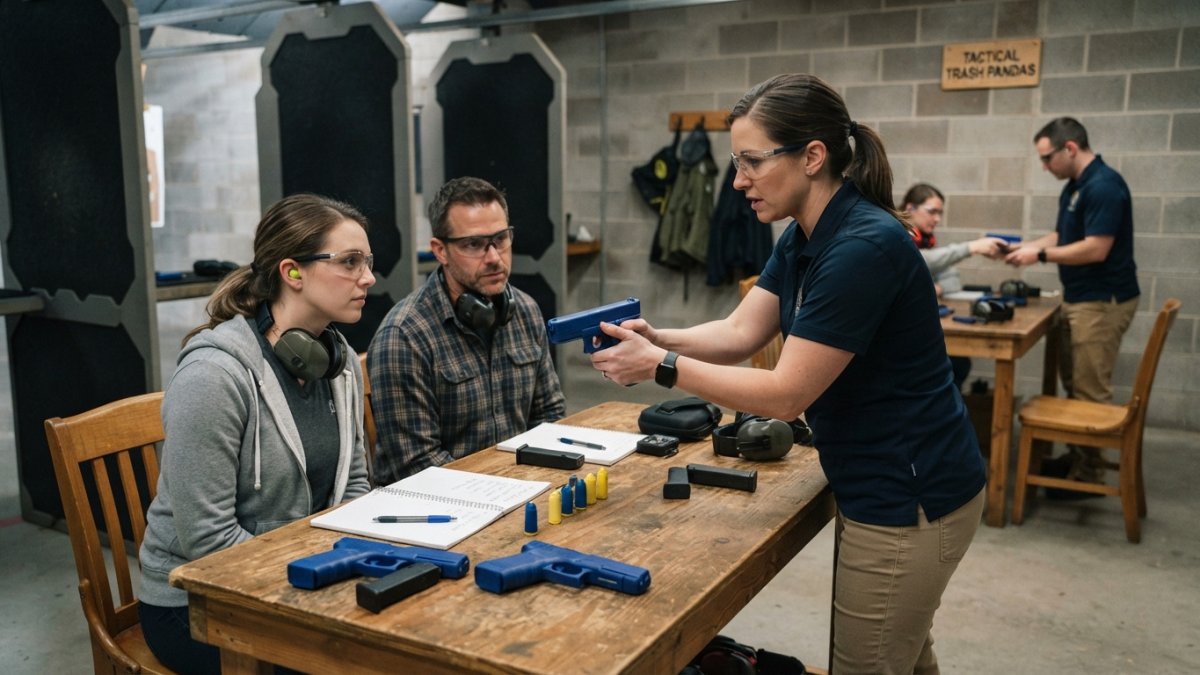
A typical session moves in stages. Students check in, review paperwork and the course outline, and sit through classroom instruction before anyone touches a firearm. Only after that does the group move to the range for supervised practice.
!A patient instructor standing beside a first-time adult student at an indoor shooting range, both wearing eye and ear protection, with a classroom table and safety materials visible in the background
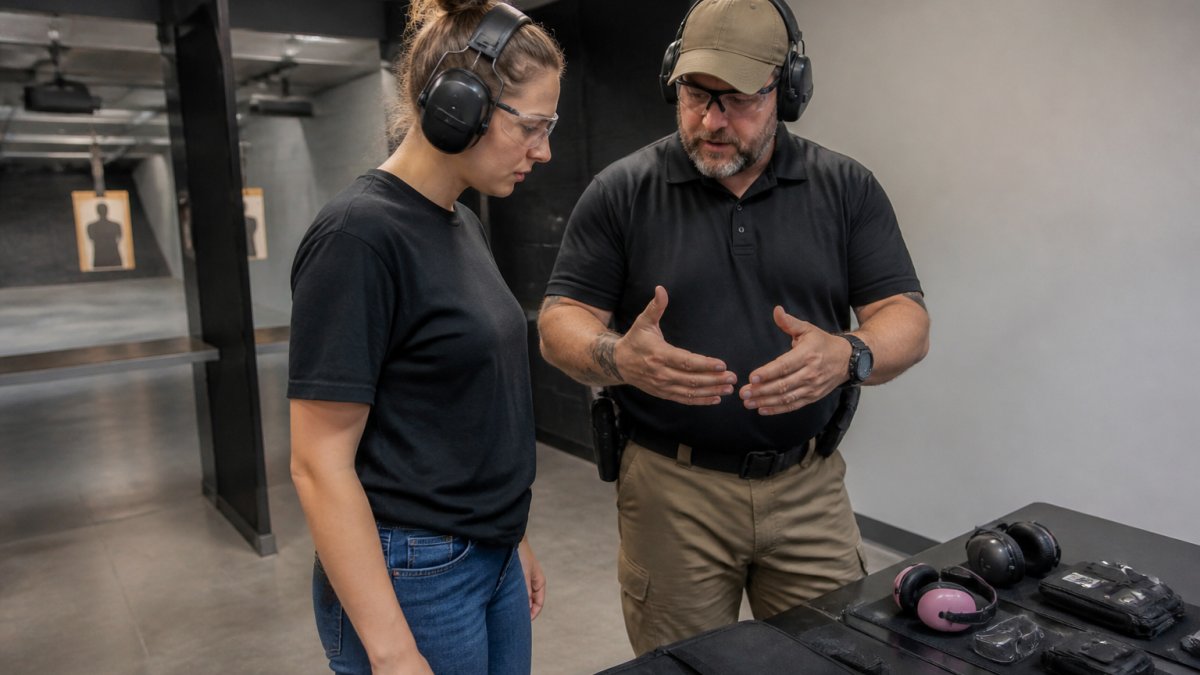
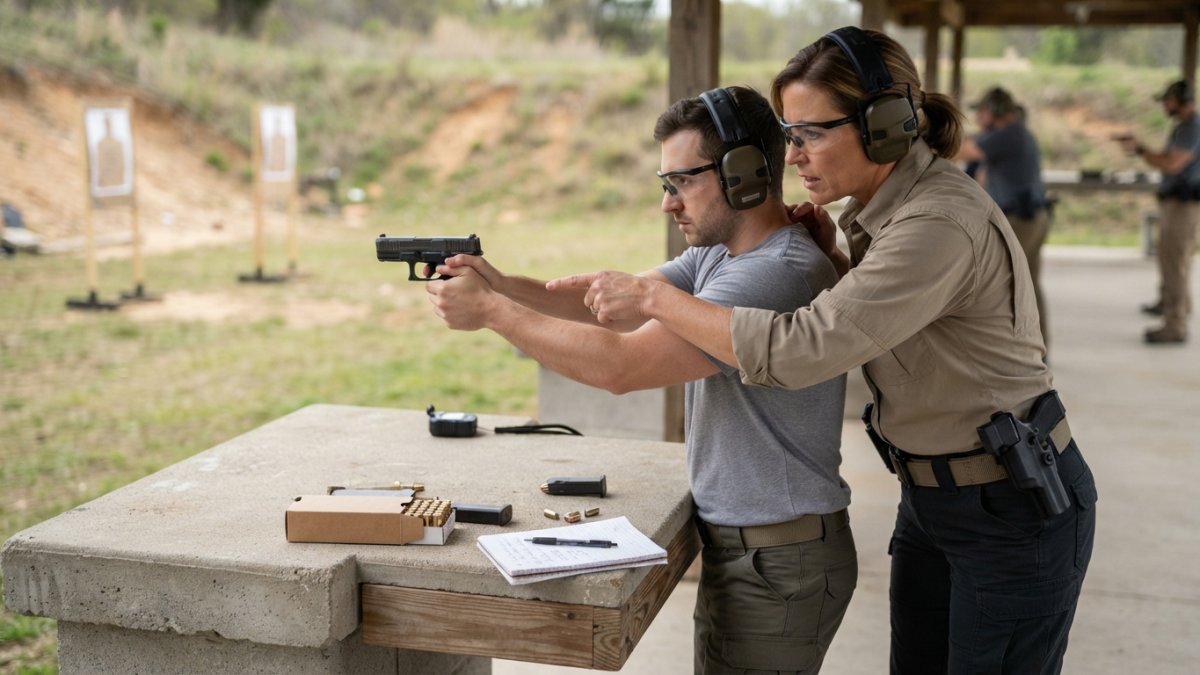
Range time is where classroom material becomes physical skill. Students practice stance, grip, and sight alignment at a controlled pace, with an instructor watching every shot. Plan for a full day or more, depending on the course level you choose.
Bring the essentials your instructor specifies, and arrive early enough to complete check-in calmly. A relaxed start makes the range portion far more productive.
The session follows a clear sequence, from check-in through classroom work to supervised range time.
| Stage | What happens | Timing |
|---|---|---|
| Check-in | Students review paperwork and the course outline | Arrive early, before class starts |
| Classroom | Instruction covers safety and rules before any firearm is handled | Before range time |
| Range time | Supervised practice of stance, grip, and sight alignment | Plan for a full day or more |
Introductory Pistol Training: Handling, Operation, and Mechanics
Introductory pistol training teaches the mechanics of a handgun: loading and unloading, safe holstering, grip, stance, sight alignment, trigger control, and clearing a malfunction. Students should learn to operate the firearm they own, not just a generic model, so instructors often encourage bringing your own gun when your class allows it.
Choosing a first handgun is easier after some training, because you learn how different grip sizes and controls feel in your hand. A helpful starting point is the beginner's guide to choosing a first firearm available on the Tactical Trash Pandas website.
Mechanics build on each other. Trigger control is practiced before speed, and recoil management is practiced with consistent grip rather than force. Progress is measured by safe, accurate repetition.
Concealed Carry Permit Requirements for Virginia Residents
Virginia concealed handgun permits are administered through state and local channels. Confirm the current application form, instructions and fees with the appropriate official source before you submit anything, because forms and fees change. Securing your permit is only the initial step in responsible ownership, as the process of choosing a handgun requires careful consideration of your specific home defense needs.
Eligibility requirements are set by Virginia law and should be confirmed against the current statute and official instructions before you apply. Many applicants satisfy the training requirement through a firearms course, and a beginner pistol class is a common starting point for new owners.
Keep the original course certificate, as the court may request a copy with your application. Fees and application details vary, so check with your circuit court and the official state instructions.
Processing times and renewal rules vary, so confirm the current validity period and renewal requirements with the official source.
For a detailed breakdown of the application steps and the training options that satisfy the competence requirement, read our overview of Virginia's concealed carry laws article. If you are enrolling in a beginner class specifically to satisfy the permit requirement, tell the instructor up front so the certificate you receive meets the statutory format.
How to Choose a Firearms Instructor You Can Trust
Start with credentials and experience. Ask what certifications the instructor holds, how long they have taught, and whether the curriculum follows a recognized standard. Qualified instructors should be able to answer these questions directly.
Next, evaluate the teaching style. A good instructor is patient with complete beginners, explains the reasoning behind each rule, and corrects mistakes without belittling students. Ask whether beginners and experienced shooters are placed in separate groups.
Finally, look at the program's transparency.
Equipment and Clothing: What to Bring and What to Skip
Most beginner courses require eye and ear protection, closed-toe shoes, and comfortable clothing that allows full range of motion. Check your confirmation email for any equipment the instructor requires, such as a specific firearm, ammunition, or a holster. Bring a water bottle and a snack for a long session, and skip loose outerwear that obscures the waistband, unnecessary accessories, and gear you have not tested.
The bigger decision for most first-timers is whether to rent a firearm for the class or buy one beforehand. Here is the trade-off in plain terms:
- Rent first if you are brand new. Many indoor ranges rent handguns and sell ammunition on site. Renting lets you try a full-size pistol and a compact model in the same session, which is the fastest way to learn what grip size and controls actually feel right in your hand. You also avoid buying a gun you may outgrow after one class.
- Buy first if you already know your goal. If you intend to pursue a concealed handgun permit and carry daily, buying a compact pistol before class lets you train on the exact firearm you will carry.
- Check the course policy either way. Rental and ammunition arrangements differ by course. Ask before you register so you are not scrambling the morning of class.
A common pattern among new shooters is to rent for the first class, then buy after they have handled a few models under supervision.
For a deeper walkthrough of the rent-versus-buy decision and how to evaluate your first handgun, see the beginner's guide to choosing a first firearm on our site. If you are unsure what a specific course requires, ask the provider before the day of class, a short question in advance avoids wasted time at check-in.
Managing First-Time Shooter Anxiety and Post-Class Practice
Nervousness is normal for a first-time shooter. Most students feel tense during their first range session, and that tension usually fades as they gain familiarity with the routine. Focus on one step at a time, and tell your instructor if you need a pause.
Post-class practice matters as much as the class itself. Revisit safety rules, dry-fire your grip and trigger control only where local rules permit, and schedule range time regularly so skills do not fade. Consider a follow-up course to build on fundamentals.
Track your progress honestly. Note what felt comfortable and what still needs work, then bring those questions to your next session.
Booking Your First Beginner Class With Tactical Trash Pandas
Booking a first class is straightforward when you know what to ask. Before you register, confirm the course level, the equipment required, the schedule, and the total time commitment. Ask whether the class suits complete beginners and whether a firearm rental or your own gun is needed.
Tactical Trash Pandas provides reality-based safety and firearms training designed to build practical skills and a stronger margin of safety. You can review current offerings and register through the website, where you will also find a ready-to-buy guide for your first firearm and the course options that fit your goals.
For personalized instruction, one-on-one firearms training is available in Manassas, and the business website has details on current options.
Frequently Asked Questions
What should a beginner expect in a firearm safety class?
A beginner firearm safety class typically covers the universal safety rules and how to handle and store a handgun, followed by supervised practice. Confirm the specific course structure with the provider. Nobody is expected to shoot well on the first day, and the goal is building safe habits you can repeat on your own.
Do I need to own a firearm before taking a beginner class?
No. Rental and ammunition arrangements differ by course, so confirm what is provided when you book. Ask the provider for current pricing directly, or check the website or request a quote for up-to-date rates.
What should I bring to my first firearm class?
Check the provider's confirmation email for the specific requirements of your course before you arrive.
How do I choose a qualified firearms instructor?
Look for an instructor who can explain their credentials and teaching background, and who runs a structured curriculum. Ask the provider how the course is organized and how students are supported. A qualified instructor will emphasize safety first and tell you honestly what a single class can and cannot teach.
How long does a beginner firearm class usually take?
Course length and format differ across providers, so check the course listing for the exact duration and whether it includes live fire. Plan extra time for registration and equipment checks.
Can beginners take a pistol class without prior experience?
Yes. Introductory pistol training is designed for people with no prior experience, and it starts with the basic mechanics of the handgun before any live fire. Introductory training generally covers how to check that a firearm is unloaded and how to hold it safely. Tell the instructor at the start that you are a complete beginner so they can adjust the pace and the level of detail.
What safety rules are taught in an introductory firearm course?
Introductory firearm instruction generally covers the universal safety rules, which apply at home as well as on the range.
How can I manage anxiety before my first firearm class?
Start by reviewing the course outline and the range rules so the day feels less unpredictable. Arrive early enough to complete check-in without rushing, and tell your instructor if you are nervous. Focus on one step at a time, such as grip or breathing, rather than on how you compare to others. After the class, practice the safety rules at home with an unloaded firearm and keep your notes for review.
Ready to build real skill? Choose a beginner course, confirm your equipment, and start with safety. Register with Tactical Trash Pandas to take your first step with supervised, practical instruction.