 Ultimate guide
Active Shooter Response Training for Businesses: A Complete Guide
Last Updated: November 10, 2026
Quick Summary
Active shooter response training for businesses teaches employees the Run, Hide, Fight framework: evacuate if a safe exit exists, secure and barricade yourself if you cannot, and fight only as a last resort. Training should happen at least once a year for all staff, with quarterly tabletop exercises for leadership and refreshers for new hires within their first thirty days.
- At least two-thirds of active-shooter incidents are over before law enforcement arrives.
- Announce drills at least one week in advance and never run unannounced active-threat simulations.
- Run tabletop exercises quarterly and full-scale mock drills annually, always with warning.
- Assign a program owner and a site coordinator, and track corrective actions to closure.
- Review the emergency action plan annually and after triggers like renovations or staffing changes.
Table of Contents
- Why Active Shooter Response Training for Businesses Matters
- Active Shooter Response Procedures Every Employee Should Know
- Building an Active Shooter Emergency Action Plan for Your Workplace
- How to Run Active Shooter Drills in the Workplace
- Active Shooter Training Frequency: How Often Is Enough?
- Trauma-Informed and Accessible Training and Drills
- Adapting Training for Remote, Hybrid, and Multi-Site Workplaces
- Measuring Training Effectiveness and Maintaining Your Plan
- Choosing the Right Active Shooter Training Provider
- Frequently Asked Questions
Why Active Shooter Response Training for Businesses Matters
At least two-thirds of active-shooter incidents are over by the time law enforcement arrives, according to the StatPearls clinical review of active shooter response. That single fact explains why active shooter response training for businesses is not a compliance checkbox. It is the difference between employees who freeze and employees who act in the first sixty seconds.
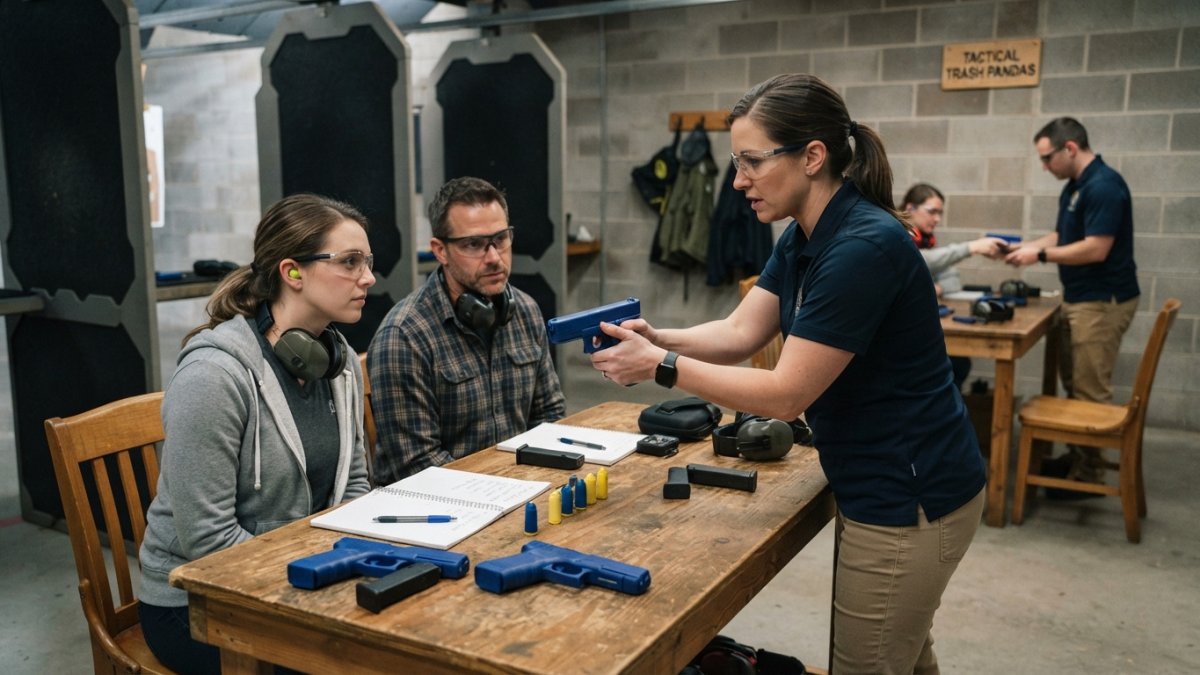
Tactical Trash Pandas provides reality-based safety and firearms training that focuses on practical tactics, techniques, and procedures.
The threat is rare but the consequences are absolute. Multiple people can be shot within a few minutes. They will have time for one decision: run, hide, or fight.
Below, we break down response procedures, how to build an emergency action plan, how to run drills safely, and how to measure whether any of it worked.
Active Shooter Response Procedures Every Employee Should Know
Active shooter response procedures are the pre-decided actions employees take when gunfire starts: evacuate if you can, secure yourself if you cannot, and fight only when your life depends on it. Every employee should know these procedures before an incident, not during one.
Three actions save lives in the first minute. Everything else is detail.
Run, Hide, Fight: The Core Response Framework
Run, Hide, Fight is the accepted national framework for civilian response, and it works because it prioritizes survival over heroics.
- Run. Leave the building if a safe exit exists. Leave belongings. Keep hands visible to arriving officers.
- Hide. If escape is impossible, get into a room that locks, barricade the door, kill the lights, silence phones, and stay low and out of sight.
- Fight. As a last resort, when hiding is no longer an option, commit fully. Use improvised weapons, work with others, and act with aggression.
The order matters. Run first. Fight only when the alternative is dying.
Recognizing Gunfire and Warning Signs
In a large building, gunfire can be mistaken for other noises such as a door slam, a dropped pallet, or construction. Training should include audio recognition practice so staff react to the sound rather than debating it.
Warning signs before an incident deserve equal attention. Threat recognition training covers concerning behaviors, escalating language, and reports that should reach management quickly. Situational awareness is a trainable skill, and it buys the seconds that matter.
Building an Active Shooter Emergency Action Plan for Your Workplace
An active shooter emergency action plan is a written document that assigns roles, defines response actions, and specifies communication methods for a violent incident. It should be short enough to memorize and specific enough to execute under stress.
Start with three components: risk assessment, access control, and emergency communication. A risk assessment identifies where people gather, where they can escape, and where they can shelter. Access control covers badge systems, locked doors, and visitor management that slow an intruder down. Emergency communication defines how the alert goes out and who calls 911.
Effective drill programs typically include a written response plan, employee education, clear drill announcements, communication testing, and lockdown or evacuation practice (Guide to Active Shooter Drills in The Workplace). Build each into the plan from day one.
Tactical Trash Pandas offers workplace safety and emergency response training, including emergency medical procedures.
How to Run Active Shooter Drills in the Workplace
Running an active shooter drill means announcing the exercise, walking employees through their response actions, testing communication systems, and debriefing afterward. A drill is a rehearsal, not a surprise. Unannounced drills create panic, erode trust, and invite liability.

The drill itself is only part of the work. Design matters: who is notified, what is simulated, who can opt out, and how people are supported afterward.
The Drill Design Sequence
Here is the sequence we recommend for a business running its first or fiftieth exercise:
- Set the objective. Decide what the drill is testing, evacuation speed, lockdown execution, alert delivery, or incident command. One objective per drill keeps the after-action review focused.
- Announce the date, scope, and limits in advance. Every employee should know the drill is coming, what will happen, and what will not happen. Publish the notice at least one week out and repeat it the day before.
- Brief staff on the scenario and expected actions. Walk through the scripted scenario, the response actions being tested, and the signal that starts and ends the exercise.
- Test the alert system end to end. Confirm delivery to every device and channel, SMS, email, desktop, public address, and phone tree, and log who did not receive it.
- Walk the evacuation routes and identify assembly points. Confirm routes are unobstructed, exits open, and assembly points are far enough from the building and known to everyone.
- Practice lockdown and barricading in designated secure rooms. Verify that doors lock, that barricade materials are present, and that lights and phones can be controlled.
- Debrief immediately and capture what failed. Hold a hot wash within an hour while memories are fresh, then a formal after-action review within a week.
- Schedule the next drill before anyone leaves the room. Readiness decays; put the next date on the calendar while the exercise is still fresh.
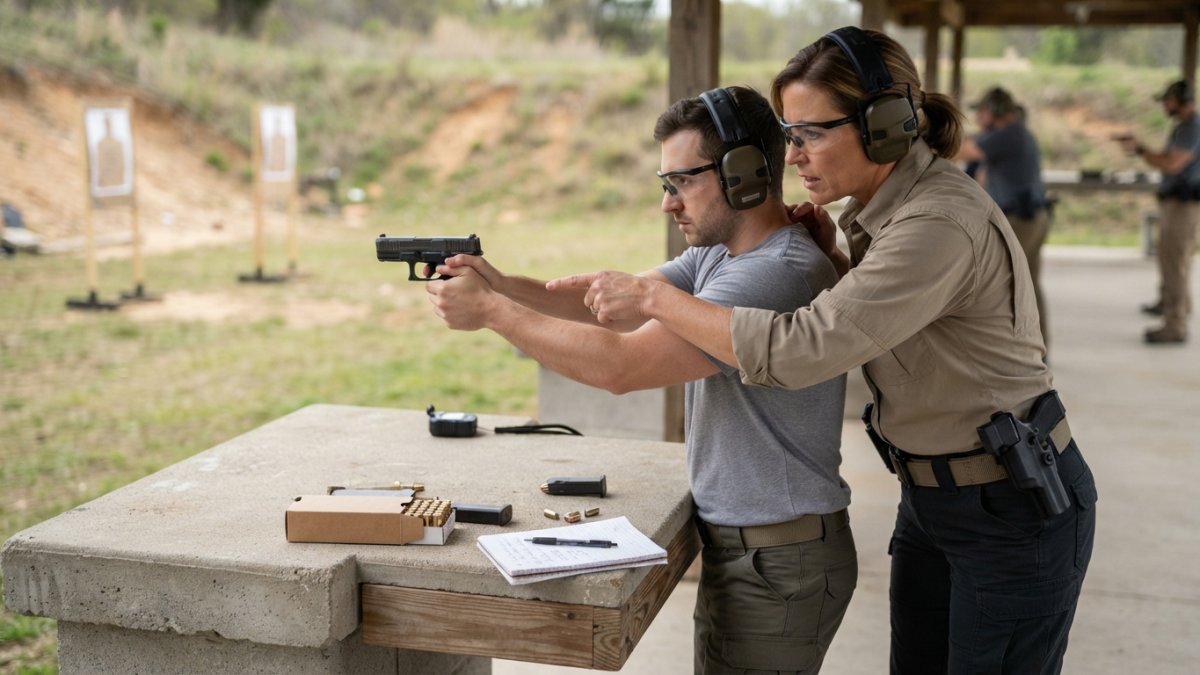
Hands-on exercises are a core part of a practical program, which is why mock scenarios and hands-on exercises matter.
Drill Safety, Consent, and Psychological Impact
A drill that frightens or re-traumatizes employees defeats its purpose. Build these safeguards into every exercise:
- Advance notice. Announce the drill in writing to all staff, contractors, and visitors who will be on site. Never run an unannounced active-threat simulation in a workplace.
- Realistic-simulation limits. Decide in advance whether you will use simulated gunfire, role players, or props. Sound effects and role players can add stress, and some employees may not be able to participate if they are used.
- Opt-out options. Give employees a clear, no-questions-asked way to decline participation, and provide an alternative activity such as a tabletop discussion or a walk-through of routes.
- Accessibility accommodations. Assign buddies for employees with mobility limitations, identify accessible evacuation routes, provide materials in the languages your workforce reads, and brief staff on where to find help.
- Debriefing and support. Offer a structured debrief and make employee assistance resources available afterward. Some employees will have prior exposure to violence, and a realistic exercise can surface it.
Watch out: skipping the opt-out and debrief steps is the most common way a well-intentioned drill turns into a complaint, a workers' compensation claim, or a morale problem that outlasts the exercise.
Tabletop Exercises vs. Full-Scale Mock Drills
A tabletop exercise is a discussion-based session where leaders talk through a scenario and their decisions. A full-scale mock drill moves people through the building and tests physical response. Tabletop exercises are low-cost, low-disruption, and ideal for testing incident command and decision-making. Full-scale drills reveal what a conference room never will: locked doors that do not lock, alerts that never arrive, and stairwells that jam.
Run tabletop exercises quarterly. Run full-scale drills annually, and never without warning. For multi-site organizations, run the tabletop centrally and the full-scale drill at each site so local exits, access control, and responder relationships are actually tested.
Active Shooter Training Frequency: How Often Is Enough?
Active shooter training frequency should be at least once a year for all staff, with quarterly tabletop exercises for leadership and refreshers whenever a new employee joins. Annual training satisfies awareness requirements; quarterly practice builds the muscle memory that survives stress.
Skills decay faster than knowledge, so pair annual classroom time with shorter, more frequent practical sessions.
New hires should never wait for the next scheduled class. Add response training to onboarding within the first thirty days. For remote and hybrid staff, deliver the same content through online modules and confirm completion.
Trauma-Informed and Accessible Training and Drills
Trauma-informed training means designing drills that prepare people without re-traumatizing them. That starts with consent, clear announcements, opt-out options, and support resources for anyone with prior exposure to violence.
Accessibility matters just as much. Drill plans should account for employees with mobility limitations, hearing loss, or anxiety conditions. Assign buddies, identify accessible evacuation routes, and brief staff on where to find help.
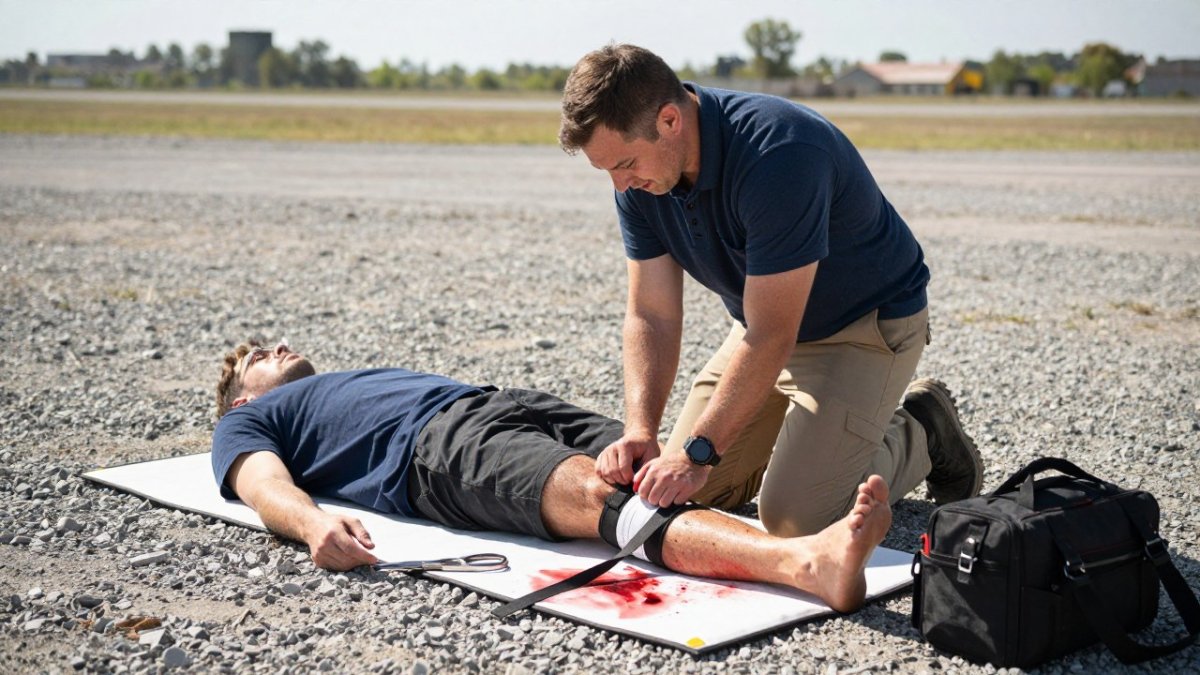
Include bleeding control in the curriculum. First aid and tourniquet skills bridge the gap until first responders arrive, and they are part of the first aid and emergency medical courses offered alongside response training.
Adapting Training for Remote, Hybrid, and Multi-Site Workplaces
Remote and hybrid workplaces need training that works through a screen and a plan that accounts for people who are not in the building. Deliver online modules for awareness, then require in-person practical sessions at least annually for anyone with on-site responsibilities.
Multi-site organizations face a harder problem: every location has different exits, different access control, and different local responders. Build a site-specific annex to the main plan for each facility. Name a site coordinator. Coordinate with local law enforcement and neighboring organizations so first responders know the layout before they need it.
For distributed teams, test emergency communication across every channel: SMS, email, desktop alerts, and phone trees. If the alert only reaches the building's public address system, your remote staff learn about the incident on the news.
Measuring Training Effectiveness and Maintaining Your Plan
Measuring training effectiveness means testing recall, observing performance in drills, and tracking whether the plan actually improves after each exercise. Completion rates prove attendance, not competence. The unique angle here is the implementation loop: most guides stop at "run a drill," but a business needs a named owner, a corrective-action tracker, and maintenance triggers that keep the plan current between drills.
Practical Indicators to Track
Use a small set of measures that a site coordinator can actually collect. The table below is a starting point; adjust targets to your building, headcount, and risk profile.
| Measure | What It Tests | Example Target |
|---|---|---|
| Unannounced recall quiz | Knowledge retention | 90% correct within 90 days |
| Drill evacuation time | Execution speed | Under 5 minutes to assembly point |
| Alert delivery confirmation | Communication reliability | 100% of staff reached |
| After-action review findings | Plan gaps | All fixed before next drill |
| Bleeding control skills check | Medical competence | Passing demonstration |
| New-hire completion within 30 days | Onboarding coverage | 100% of new hires |
No single indicator proves readiness. A fast evacuation time with a failed alert test is not a passing drill. Read the measures together and treat any red indicator as a finding to investigate.
Assigning Ownership and Tracking Corrective Actions
A plan without an owner is a document, not a program. Assign a program owner at the organizational level and a site coordinator at each facility. The owner is responsible for scheduling drills, maintaining the plan, and reporting results to leadership.
Run an after-action review within a week of every drill. Document what failed, assign each finding to a named owner with a deadline, and track it to closure in a shared log. A common pattern is to review open findings at the start of every planning meeting so corrective actions do not quietly age out. Close the loop before the next drill, and report the closure rate to leadership alongside the drill results.
Maintaining the Plan Between Drills
Review the full emergency action plan annually and after any of these triggers:
- A change in building layout, renovation, or lease space
- A change in access control, badge systems, or visitor management
- A staffing change that affects the program owner or site coordinator
- A new site, acquisition, or move to a shared building
- Any actual incident or near miss
- A change in local responder contacts or dispatch procedures
For multi-site organizations, keep a site-specific annex for each facility and confirm that local law enforcement and property managers have current site maps and access procedures. Coordination with responders is a maintenance task, not a one-time setup.
Watch out: treating a successful drill as proof of safety is the most common measurement error. A drill tests the plan on the day it runs; it does not guarantee outcomes in an incident, and leadership should hear that caveat alongside the results.
Choosing the Right Active Shooter Training Provider
The right provider teaches practical response skills, explains the reasoning behind each action, and can show you how the training changes employee behavior. Ask three questions before you sign: What are the instructors' certifications and background? Does the curriculum include hands-on practice or lecture only? How do you measure whether we improved?
Beware of providers selling fantasy tactics that collapse under real pressure. Ask for scenario-based demonstrations. Ask to speak with past clients. A provider that cannot show proof of results is selling comfort, not competence.
Pricing depends on class size, location, and curriculum scope, so request a quote rather than comparing list prices. We are happy to walk you through what each course includes and why it is built the way it is. You can explore our training programs to see the full curriculum, or review our active shooter response training in detail before you commit.
The gap between a prepared workforce and an unprepared one is measured in seconds, and those seconds belong to your employees. Tactical Trash Pandas trains teams in reality-based response, emergency medical procedures, and risk mitigation so your people act instead of freeze. Our curriculum covers Run, Hide, Fight execution, bleeding control, and workplace plan development for every skill level. Get started with Tactical Trash Pandas and give your team the margin of safety that only preparation provides.
Frequently Asked Questions
What should active shooter response training for businesses include?
Strong training combines situational awareness, threat recognition, the Run, Hide, Fight framework, evacuation and shelter-in-place practice, and emergency communication. Early-warning-sign recognition and emergency bleeding-control techniques are core elements of strong programs. Training should also cover calling 911, coordinating with local law enforcement, and post-incident support so employees know what to expect after an incident.
How often should businesses conduct active shooter drills?
There is no federal mandate for a specific frequency, so base your schedule on risk, site complexity, and staff turnover. A practical approach is annual full-scale drills with semiannual tabletop exercises and quarterly employee briefings. New hires should receive orientation training within their first month. Effective drill programs typically include a written response plan, employee education, clear drill announcements, communication testing, and lockdown or evacuation practice, which you can rotate across the year to keep skills fresh.
How can a business prepare employees who cannot evacuate quickly?
Identify employees with mobility, sensory, or medical needs during planning and assign specific coworkers to assist them. Designate secure rooms with solid doors, locks, and no windows, and stock them with communication devices. Practice shelter-in-place and lockdown procedures that account for slower movement. Trauma-informed planning means telling employees what will happen in advance, offering alternatives, and never forcing participation in a drill that could cause harm. Review these accommodations after every exercise.
How do you run a safe active shooter drill in the workplace?
Announce the drill in advance, state clearly that it is an exercise, and prohibit realistic simulations like gunfire or actors without consent. Walk the escape routes and assembly points first, then run a tabletop exercise before any full-scale drill. Test emergency communication systems, assign incident command roles, and station observers to note problems. End with a debrief and an after-action review. Drills are best treated as preparation practice rather than proof of safety.
What should an active shooter emergency action plan include?
A complete plan names incident command roles, maps escape routes and assembly points, identifies secure rooms, and lists communication channels including 911 and internal alerts. It should cover visitor management, access control, lockdown and barricade procedures, and coordination with local first responders. Include post-incident support, business continuity steps, and a schedule for drills and plan reviews. The plan must focus on what employees do in the first few minutes of an incident, before law enforcement arrives.
How can businesses train employees without causing unnecessary fear?
Frame training around practical preparedness rather than worst-case imagery, give advance notice of drills, and let employees opt out of scenarios that could retraumatize them. Use tabletop discussions and short briefings instead of surprise simulations. Explain the reasoning behind each procedure and connect it to everyday safety, like evacuation for a fire. Offer post-drill support and feedback channels. A calm, transparent approach builds confidence and keeps participation high without stoking anxiety.
Who should lead workplace active shooter training?
A cross-functional team works best: security or facilities leads the planning, HR handles accommodations and communication, and senior leadership authorizes the program and resources. Bring in a qualified outside instructor for response procedures and medical skills, and invite local law enforcement to review your plan and participate in drills. Assign floor wardens or team leads to guide evacuation and shelter-in-place. Clear ownership and defined roles keep the program running between training cycles.